

No products in the cart.
feiniwy.ch
10 tips for storing wine properly at home
- Wine knowledge
- All contributions
Who wants some Targeted wine storage tips will transform your home into a small, reliable wine cellar - even without a natural stone vault under the house. Especially if you want to store high-quality red wines, elegant white wines, champagnes or rosés with a strong character, as is the case with Feiniwy it is worthwhile storing the wine carefully so that each bottle develops its full potential.
Why well thought-out wine storage at home is important
Good wine is alive. It develops, reacts to temperature, light, humidity and vibrations. A Grand Cru from Bordeaux, a powerful Brunello, a mature Riesling or an elegant sparkling wine: they all thank you for a Stable, wine-friendly environment with more depth, finesse and moments of pleasure in the glass.
At the same time, the reality of everyday life plays a role for many connoisseurs: city flat instead of castle cellar, limited space, changing seasons. This is precisely where the 10 practical wine storage tips that can be realised without a large budget - and that meet the high quality standards of Feiniwy's customers.
Tip 1 - Constant wine storage temperature: cool, but not ice-cold
The Wine storage temperature forms the basis of every strategy. Heat accelerates ageing, cold slows it down or damages the wine.
Remember for storage:
- Optimum range for Red wine, white wine, rosé and sparkling wine to the Storage: 10-14 °C, constant
- Short-term tolerable range: 8-18 °C, as long as the temperature does not fluctuate greatly
- From over 20 °C wine ages quickly, with above 24-25 °C the flavour suffers significantly
For the Storage red wine temperature so you don't need 18 °C like when serving. The decisive factor is Stability. Even if your home is 16 °C in winter and 20 °C in summer, a sheltered corner will produce much better results than a sunny spot next to the heating.
If you put wines aside for a longer period of time, such as great Italians from the Italian red wines, a particularly constant place is worthwhile - or a wine refrigerator.
Tip 2 - Storing red wine Temperature vs. white wine: Serving temperature is not storage
Many connoisseurs are confused by the different numbers for consumption and storage. Hence the separation:
Serving temperatures (guide values):
- Red wine in a glass: 16–18 °C
- Strong white wine (e.g. Chardonnay): 10-12 °C
- Light white wine / fresh rosé: 8-10 °C
- Champagne and sparkling wine: 6-8 °C
Wine storage at home on the other hand is orientated for all colours to around 12 °C.
This means that you store both Red wine as well as white wine with the same Wine storage temperature and only temper the bottles separately before serving. This simplifies planning - especially if you have a mixed range of red, white and sparkling wines, as is the case with Feiniwy white wines care.
Tip 3 - Store wine horizontally or vertically? The closure decides
One of the most frequently asked questions is: „Storing wine horizontally or vertically?“
The answer:
- Natural cork:
- Always lying store.
- This keeps the cork elastic and tight and prevents oxygen from penetrating.
- Screw cap, glass cap, plastic cork:
- Ability standing or lying down store.
- For many collectors, horizontal storage on the wine rack looks more harmonious, but technically it remains flexible.
For a high-quality Bordeaux from the range French red wines With natural cork, the following applies: permanently horizontal storage, preferably on a stable shelf, so that the cork remains reliably sealed for decades.
Tip 4 - Wine storage in the fridge: allowed for a short time, problematic in the long term
The normal domestic refrigerator seems practical at first glance - it cools, is dark and always available. It works well for short-term wine storage, but creates an unfavourable environment in the long term:
- Temperature too low (typically 4-6 °C)
- Humidity often too low
- Vibrations from the compressor
- Strong odours (cheese, onions, leftovers)
Good rule of thumb:
- Up to 1-2 weeksStoring wine in the fridge usually works without any problems.
- For months or years: it is better to use a Wine fridge or another cool room.
Valuable bottles in particular - such as mature sparkling wines from the Sparkling Wines & Champagne - deserve an environment that is geared towards wine and not sausage and cheese.
Tip 5 - Wine storage humidity: protection for corks and labels
In addition to temperature, the Wine storage Humidity a key function:
- Ideal position 60-75 % Relative humidity
- Under 50 %Corks dry out, become leaky, wine oxidises
- About 80 %Labels go mouldy and come loose, boxes and shelves suffer
A classic natural cellar often has exactly this environment. The situation is different in modern flats: Heating systems dry the air, air conditioning systems intensify this effect.
Practical tips for at home:
- A small Hygrometer shows you the humidity in the wine store.
- If the air is too dry, a Bowl of water or a humidifier.
- If the environment is too humid, transparent film or label protectors protect particularly valuable bottles.
If you want to expand your collection with fine, mature white wines from the French white wines benefits greatly from stable conditions, as they often react more sensitively.
Tip 6 - No cellar? The ideal way to store wine at home
Many wine lovers ask: „Where can you store wine if you don't have a cellar?“
Even without a natural cellar, wine Store sensibly at home - The criteria are decisive, not the room name.
Suitable places in the home:
- Interior storage room without heating
- Lower compartments of a closed cupboard on an interior wall
- Dark alcove in the hallway, far away from windows and radiators
- Pantry with stable, slightly cool temperature
Less suitable:
- Directly above radiators or next to ovens
- On windowsills or on sunny kitchen shelves
- Attic with high temperatures and fluctuations
- Garage with frost in winter and heat in summer
If you want to invest in high-quality selections such as strong Spaniards or elegant Austrians from the Austrian red wines a deliberately chosen place in the home that remains relatively stable in summer and winter is worthwhile.
Tip 7 - Wine storage shelf: calm, darkness and structure
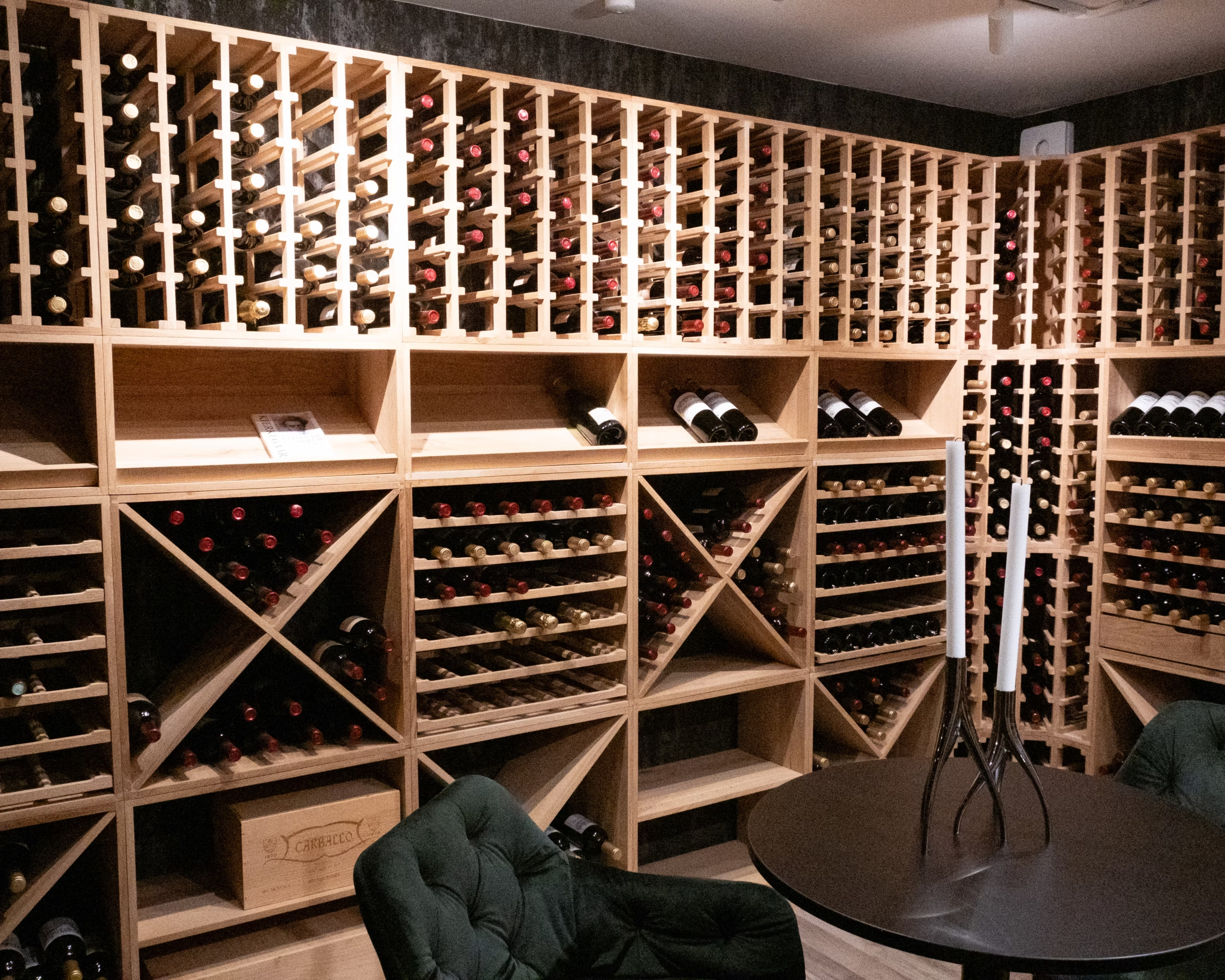
A well thought out Wine storage shelf not only creates order, but also actively improves storage conditions.
Important features of a good shelf:
- StabilityNo wobbling, no vibrations
- MaterialWood, metal or stone that do not emit any foreign odours
- Storage position: Horizontal compartments for cork wines
- Light protectionClosed front, dark location or doors with UV filter glass
Structure also brings pleasure:
- Sort by Colour (red, white, rosé, sparkling wine)
- Within the colour according to Region or Producer
- Mark Drinking window (e.g. 2027-2035) on back labels or with small cards
Those who specifically select mature wines such as Bolgheri icons, elegant Burgundies or rare champagnes at Feiniwy benefit greatly from an overview. You can quickly find the bottle that is perfectly ripe today.
Tip 8 - Wine refrigerator: convenient solution for precise wine storage at home
If you are expanding your private collection or frequently purchase high-quality wines from Feiniwy, a Wine fridge the ideal partner. It combines all the core elements of the Wine storage tips in one device:
- Constant Temperature in the range 5-20 °C
- Controlled Air humidity
- Low Vibrations
- Dark, often UV-protected glass door
Overview: advantages and disadvantages of three popular storage locations
| Storage location | Advantages | Disadvantages | Recommendation |
|---|---|---|---|
| Normal refrigerator | Fast, available everywhere, cool | Too cold, too dry, vibrations, odours | Short term (1-2 weeks) |
| Dark living room | Favourable, flexible, quiet | Temperature fluctuates depending on the season | Medium-term, everyday wines |
| Wine fridge | Constant temperature, dark environment, humidity | Acquisition costs, space requirement | Long-term, high-quality collections |
For example, if you are looking for a fine selection of red wines from Italy, Spain and Switzerland from the categories Italian red wines, Spanish red wines and Swiss red wines can achieve professional conditions in a small space with a wine climate control cabinet.
Tip 9 - Rest, light protection and no foreign odours
Wine reacts sensitively to its surroundings - similar to a finely tuned perfume.
Three underestimated factors:
Light
UV radiation triggers chemical reactions, wine „tilts“ aromatically.
- No direct sunlight
- No halogen spotlights directly in front of the shelf
- Dark bottles offer protection, but are no substitute for a dark room
Vibrations
Constant movement keeps the suspended matter in the wine in disarray and the maturation process is inharmonious.
- Keep away from washing machines, tumble dryers or busy staircases
- No storage space on vibrating kitchen appliances
Foreign odours
Cork attracts odours. Intensive odour sources in the vicinity are sufficient for years of storage.
- No wine storage next to paints, varnishes, solvents or spice racks
- Prefer a clean, odourless environment
This is how you preserve the delicate flavours of a Chardonnay from the category Italian white wines or a champagne from the selection of sparkling wines that you will find at Feiniwy.
Tip 10 - Storage strategy: Which wines should be stored for how long?
Not every wine wins over the years. Some bottles shine when young, others only develop their class with time. A clever strategy increases enjoyment and protects against disappointment.
Baselines:
Everyday wines / basic qualities
- Drinking window: mostly 1-3 years after the purchase
- Focus on freshness, fruit, accessibility
Premium quality wines (e.g. Chianti Classico, Rioja Crianza, high-quality estate wines)
- Drinking window often 3-8 years, depending on region and vintage
Top wines (Barolo, Brunello, great Bordeaux, top Burgundy, mature Rieslings)
- Storage potential frequent 10-20 years and more
Orientate yourself on:
- Details of the producer
- Experience of your wine merchant
- Tasting experience: a wine that is already very harmonious when young usually needs less time
When you shop at Feiniwy, you benefit from a curated selection: Many wines have clear ageing potential. Take advantage of this and order Drinking window notes digitally or in a classic notebook. This way, you can provide your guests with a great bottle exactly when they are at the peak of their development.
Frequently asked questions about our wine storage tips
How do you store wine at home over a longer period of time?
For longer wine storage at home, create a constant temperature of 10-14 °C, a humidity of 60-75 %, darkness and quiet. Store bottles with natural cork horizontally and protect them from vibrations and strong odours. A wine refrigerator or a cool interior is more suitable than a normal refrigerator. Sort by drinking window so you can enjoy each wine at its optimum stage.
Where can you store wine if you don't have a cellar?
Wine can also be stored without a cellar if you observe the conditions. Use a dark storeroom, a closed cupboard against an interior wall or a cool pantry. A stable wine storage temperature below 20 °C, no direct sunlight, no heating nearby and sufficient humidity are important. For high-quality wines, a compact wine refrigerator that brings professional storage conditions into the home is worthwhile in the long term.
Should wine be stored horizontally or vertically?
Wines with natural corks are stored horizontally so that the cork remains in constant contact with the wine and does not dry out. This keeps the bottle tight and reduces the risk of oxidation. Bottles with screw caps, glass caps or plastic corks can be stored upright or lying down, depending on how it is more practical in your wine storage rack. A continuous horizontal system is ideal for uniform organisation.
What is the ideal temperature for storing red and white wine?
The wine storage temperature differs from the serving temperature. A range of 10-14 °C is considered optimal for storing red wine, white wine, rosé and sparkling wine. For red wine by the glass, 16-18 °C is suitable, for white wine between 8 and 12 °C, champagne tastes best at 6-8 °C. Store all wines together in a cool, dark place and temper them individually shortly before drinking.
How useful is a wine refrigerator for storing wine?
A wine refrigerator creates a controlled environment for wine storage tips: It constantly maintains the desired temperature, protects against light, limits vibrations and regulates the humidity. A wine refrigerator significantly improves the ageing conditions, especially for high-quality red wines, white wines and sparkling wines with storage potential. For larger collections or premium wines, as you will find at Feiniwy, it is a very efficient and convenient solution.
Can I store wine in a normal refrigerator?
The normal refrigerator works for short-term wine storage over a few days. However, it is not suitable for longer periods: the temperature is too low, the air is too dry and vibrations and foreign odours affect the wine. It is therefore better to store high-quality bottles in a cool room or wine refrigerator. Only use the domestic refrigerator as a stopover just before serving, for example for white wine, rosé or sparkling wine.
What role does humidity play in wine storage?
Humidity protects corks and labels. Ideally, it should be between 60 and 75 %. If it is too low, corks dry out, oxygen gets into the bottle and the wine oxidises. If it is too high, the appearance suffers: labels go mouldy and cartons soften. A hygrometer helps you to check the value in the wine store, and with small measures such as a water tray in the room or a humidifier, you can maintain a wine-friendly climate.
Wines at fair and transparent prices
feiniwy.ch
Felber wine office
feiniwy.ch