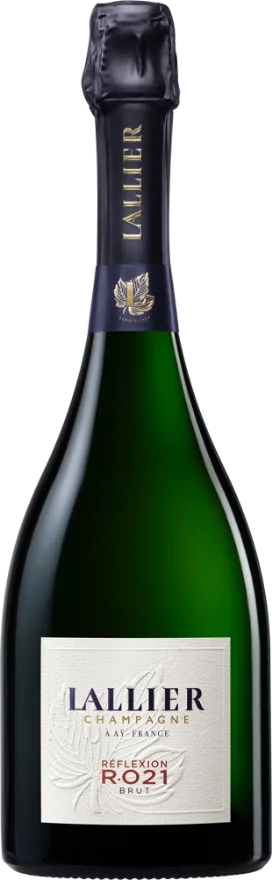
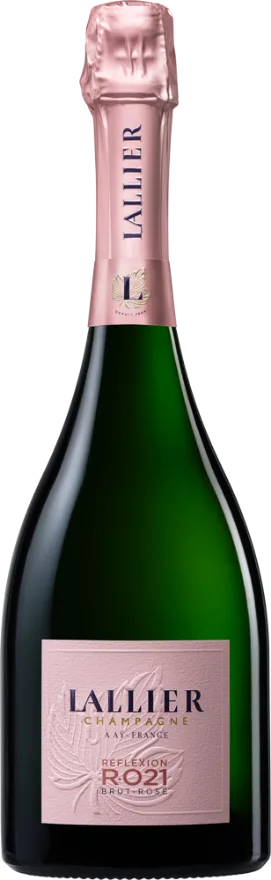
Edition R.021 Rosé Brut
Tasting note
A fresh, crisp rosé champagne with a delicate, luminous pink hue in the glass. The nose is dominated by lively citrus aromas such as blood orange and kumquat, followed by subtle notes of red fruit. Ripe nuances of brioche and fresh hazelnut – characterised by carefully matured reserve wines – lend the bouquet additional depth. On the palate, the R.021 Rosé displays impressive purity, a salty freshness and a delicate, pleasant hint of bitterness on the finish. The structure of the Pinot Noir and the supple fullness of the Meunier ensure length and aromatic complexity.
Vinification
The R.021 Rosé consists of 70 % of wines from the 2021 vintage, supplemented by 30 % of reserve wines from 2020. The blend comprises 53 % Pinot Noir (including 7 % still red wine from Bouzy), 41 % Chardonnay and 6 % Meunier. The grapes come from renowned crus in the Montagne de Reims, Aÿ, Côte des Bar, Côte des Blancs and Côtes de Sézanne. The champagne was aged on the lees for an average of 36 months and disgorged with a dosage of 7 g/L.
Origin
Winery
Lallier Champagne
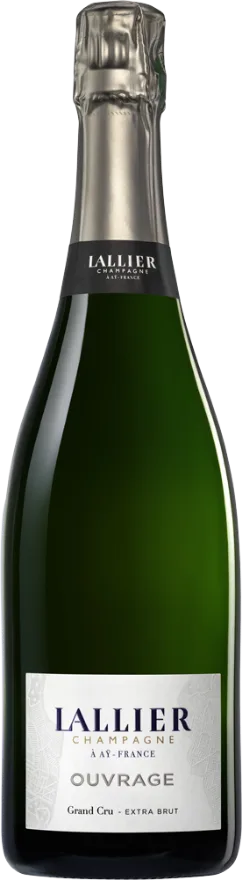
Lallier is one of the most prestigious houses in Champagne and is renowned for its meticulously crafted, terroir-driven champagnes with a distinctive character. Founded in 1906 in the historic Grand Cru village of Aÿ, the house is one of the few to vinify exclusively grapes from Grand Cru vineyards. Particularly well-known are the Edition R series, the Blanc de Blancs, the Brut Nature and the handcrafted prestige cuvée Ouvrage.
Grand Cru as a guiding principle – the Lallier philosophy
What sets a champagne house apart from the rest in the world of prestigious sparkling wine is rarely the technology – it is the consistency in its approach to the terroir. At Maison Lallier, this consistency means: exclusively Grand Cru grapes, uncompromising selection and a clear stylistic vision. Founded in 1906 by René Lallier in the Grand Cru village of Aÿ – one of the 17 Grand Cru-classified villages in Champagne – the house has remained true to its founding location to this day. The ageing cellar is located in Aÿ, whilst the modern production facilities are in Oger on the Côte des Blancs: two complementary sites, both in Grand Cru territory.
Since 2020, Dominique Demarville has held the dual role of cellar master and managing director at the house. Demarville is regarded as one of Champagne’s most renowned cellar masters – with over 23 years’ experience in senior positions at various houses. Under his leadership, Lallier adheres to four clear stylistic principles:
- Frische als sensorischer Grundton aller Cuvées
- Reinheit als Massstab für handwerkliche Präzision
- Tiefe und Intensität als Ausdruck des Grand-Cru-Terroirs
- Authentizität als Haltung gegenüber Natur und Jahrgang
Aÿ and Oger – two Grand Crus, one style
Lallier’s grape variety policy is rooted in geography: Pinot Noir from the Grand Cru vineyards of Aÿ and Verzenay in the Montagne de Reims, and Chardonnay from Oger, Cramant and Avize on the Côte des Blancs. The vineyards stretch along a north-south axis linking the two extremes of Champagne – a mosaic of terroirs that ensures the house enjoys both stylistic depth and diversity.
Champagne provides the geographical setting: France’s northernmost wine-growing region, characterised by chalky soil that ensures a balanced water supply for the vines. Three classic grape varieties define the region:
- Chardonnay: weiss, vermittelt Frische, Mineralität und Eleganz; bei Lallier aus Oger, Cramant und Avize
- Pinot Noir: rote Traube, liefert Struktur und Kraft; bei Lallier aus Aÿ und Verzenay
- Pinot Meunier (Meunier): rote Traube, verleiht Zugänglichkeit und Fülle
At Lallier, all three varieties are used – depending on the cuvée, the winemaking process strikes a finely balanced blend between stainless steel tanks, which preserve freshness, and ageing in wood, which adds complexity. Malolactic fermentation is used selectively, rather than as standard.
The Lallier Cuvées – Range and Lines
The house’s range is divided into clearly distinct lines. Each cuvée shares the Grand Cru philosophy as its common thread, whilst at the same time possessing its own distinctive character:
- Edition R.021 Brut: die charakteristische Einstiegscuvée des Hauses; zugänglich, präzise und klar im Lallier-Stil verankert, mit Reserveweinen aus gereiften Eichenfässern; bei von Salis in 75cl erhältlich, auch als Giftbox
- Edition R.021 Rosé Brut: der Roséchampagner des Hauses; salzig-frisch mit lebendigen Zitrus- und Beerennoten; bei von Salis in 75cl erhältlich
- Blanc de Blancs Brut: reinsortiger Chardonnay aus Grand-Cru-Lagen; florale Eleganz mit mineralischer Spannung und seidenartigem Körper; bei von Salis in 75cl erhältlich
- Blanc de Noirs Brut: reinsortiger Pinot Noir; körpervoll, komplex, mit Struktur und harmonischer Würze; bei von Salis in 75cl erhältlich
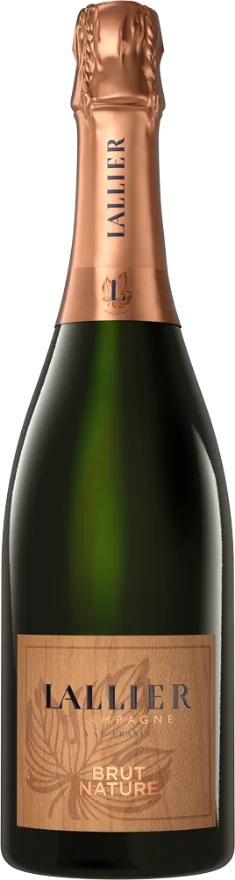
- Brut Nature: ohne Dosage, vier Jahre auf der Hefe; kristallin-mineralischer Ausdruck reiner Herkunft; bei von Salis in 75cl erhältlich
- Millésimé Brut: jahrgangsdatierter Champagner; elegant, präzise, mit langem salzigem Finale; bei von Salis in 75cl erhältlich
- Ouvrage Parcellaire Vintage Extra Brut: die handgefertigte Prestige-Cuvée des Hauses, Assemblage zweier Ausnahme-Grand-Cru-Parzellen (Les Hureaux und Les Meurtets); bei von Salis in 75cl erhältlich
All the cuvées share the house’s stylistic foundation: freshness, purity, depth and intensity.
Storage and ageing potential
Lallier champagnes vary in their ageing potential depending on the range. The Edition R-Cuvées are designed to be enjoyed young, but can also be cellared for several years. The Brut Nature benefits from minimal but effective bottle ageing, which further sharpens its mineral precision. The Millésimé and Ouvrage offer the greatest ageing potential: The Millésimé 2014 possesses the balance and structure that reward longer ageing; the Ouvrage, as a handcrafted single-vineyard cuvée, develops additional complexity and aromatic depth with years in the cellar. When storing at home, ensure the wine is kept in a cool, dark and vibration-free place, and stored horizontally wherever possible to keep the cork in good condition and prevent oxidation.
Similar wines
Full range