

No products in the cart.
feiniwy.ch
Grape varieties - Merlot
- Wine knowledge
- All contributions
Europe is under political tension, but for wine lovers the continent remains one thing above all: the most diverse wine landscape in the world. Anyone who really understands Merlot and other European wines reads the geography, climate and culture of Europe into every grape. In this article, the Felber Wine Office takes you on a journey through Europe by the glass - with a focus on Merlot, grape consistency, wine knowledge and the interplay of origin and typical flavour characteristics.
Europe as the cradle of modern viticulture
Europe forms the centre of the classic wine world. From the Atlantic coast of Portugal to the limestone terraces of the Wachau, from Tuscany to Valais: The continent offers an enormous variety of soils, climate zones and grape varieties in a very small area. This is precisely what gives the wines the character that connoisseurs appreciate so much.
For Feiniwy and the Felber wine office, Europe is a curated promise: Each bottle tells a story of origin, craftsmanship and style. While other continents score with power and opulence, Europe impresses with balance, structure and regional identity. Merlot, one of the most widespread red varieties in the world, demonstrates this particularly impressively.
Wine knowledge compact: What makes Merlot so unique in Europe
Merlot originally comes from south-west France and has conquered the whole of Europe from there. Today, the grape variety is grown in France, Italy, Spain, Switzerland, Austria and other countries and is used in many of the most sought-after cuvées.
Typical Merlot characteristics in Europe:
- Colour: medium to deep ruby red, brick reflections with age
- Nose: cherry, plum, blackberry, often with notes of herbs, chocolate or tobacco
- Palate: soft tannins, medium to full body, harmonious acidity
- Style: from fruity and elegant to powerful and concentrated - depending on region and ageing
In Europe, Merlot often forms the antithesis to tighter varieties such as Cabernet Sauvignon, Sangiovese or local specialities. The variety brings fullness, juiciness and polished tannins to cuvées and shows great charm and accessibility as a single-varietal wine.
If you would like to delve deeper into the basics, we also recommend taking a look at our compact Wine knowledge.
Europe's geography in a glass: climate, soils and grape consistency
How Europe geographically shapes the character of Merlot
Europe can be roughly divided into cooler, temperate and warmer wine zones. It is precisely these differences that shape Grape consistency, sugar content, acid structure and flavour.
- Cool zones (parts of Germany, Switzerland, Austria, northern Italy): slower ripening, thicker berry skins, higher acidity, firmer tannins
- Moderate zones (Bordeaux, northern Spain, many regions of central Italy): balanced sugar-acid ratio, juicy grapes, fine tannin structure
- Warmer zones (Southern France, Mediterranean islands, parts of Spain): softer berries, concentrated juice, milder acidity, ripe tannins
Grape consistency forms the foundation of the later wine style. In warmer regions, the Merlot berry almost swells with ripeness, the juice appears viscous and concentrated. In cooler regions, the berries show more tension, denser flesh and more distinctive skins - the perfect basis for wines that can be stored.
Understanding grape consistency: From the vineyard to the glass
If you are consciously tasting Merlot from Europe, it is worth taking a look behind the scenes: How does the grape feel in the vineyard and how does this feel translate to the wine?
Factors influencing grape consistency:
- Soil structure: Gravel, slate, lime, clay or sand control the water balance, vigour and berry size.
- Climate and vintage: Sunshine duration, temperature, precipitation and harvest time influence sugar, acidity and berry skinning.
- Yield management: Pruning, thinning and foliage work control yield per vine and thus concentration.
- Maturity level: Fully ripe grapes appear softer, with denser fruit; just ripe grapes show a firm structure and fresh acidity.
Winegrowers in Europe regularly test each plot in autumn. Between fingertips and palate, a picture emerges of how much structure, juice and tannin the Merlot will bring this year. This is followed in the cellar by fine-tuning the maceration time, fermentation temperature and ageing.
Typical flavour characteristics of Merlot in the main European regions
A comparison of the most important Merlot strongholds in Europe helps to better categorise the continent. The following table provides a guide to the extent to which Europe varies in the character of Merlot.
Table: Merlot in Europe - origin, grape consistency and flavour profile
| Region in Europe | Grape consistency | Typical flavour characteristics | Style in glass |
|---|---|---|---|
| Bordeaux (left/right bank) | Medium-sized, juicy berries, fine skins | Black cherry, plum, spice, tobacco | structured, ripe, good ageing potential |
| Tuscany / Central Italy | concentrated berries, dense flesh | dark fruits, herbs, graphite, chocolate | powerful, with present tannins |
| Northern Italy (South Tyrol, Friuli) | compact berries, distinctive skins | red fruits, spice, fresh acidity | elegant, precise, rather cool-looking |
| Spain (Ribera, Navarra) | Ripe, soft berries | Blackberry, stewed plums, vanilla, roasted flavours | Full-bodied, warm, often wood-accentuated |
| Switzerland | depending on the region: firm to juicy | Red and black berries, herbs, subtle woody notes | delicate, characterised by terroir |
| Austria | small, dense berries | dark cherry, sour cherry, herbs, lively acidity | precise, structured, often cool and elegant |
This table shows that Europe offers a whole map of Merlot styles. For Feiniwy, we select wines that clearly show their origin rather than masking it.
Europe and Merlot: France as a starting point
Bordeaux: The historic centre
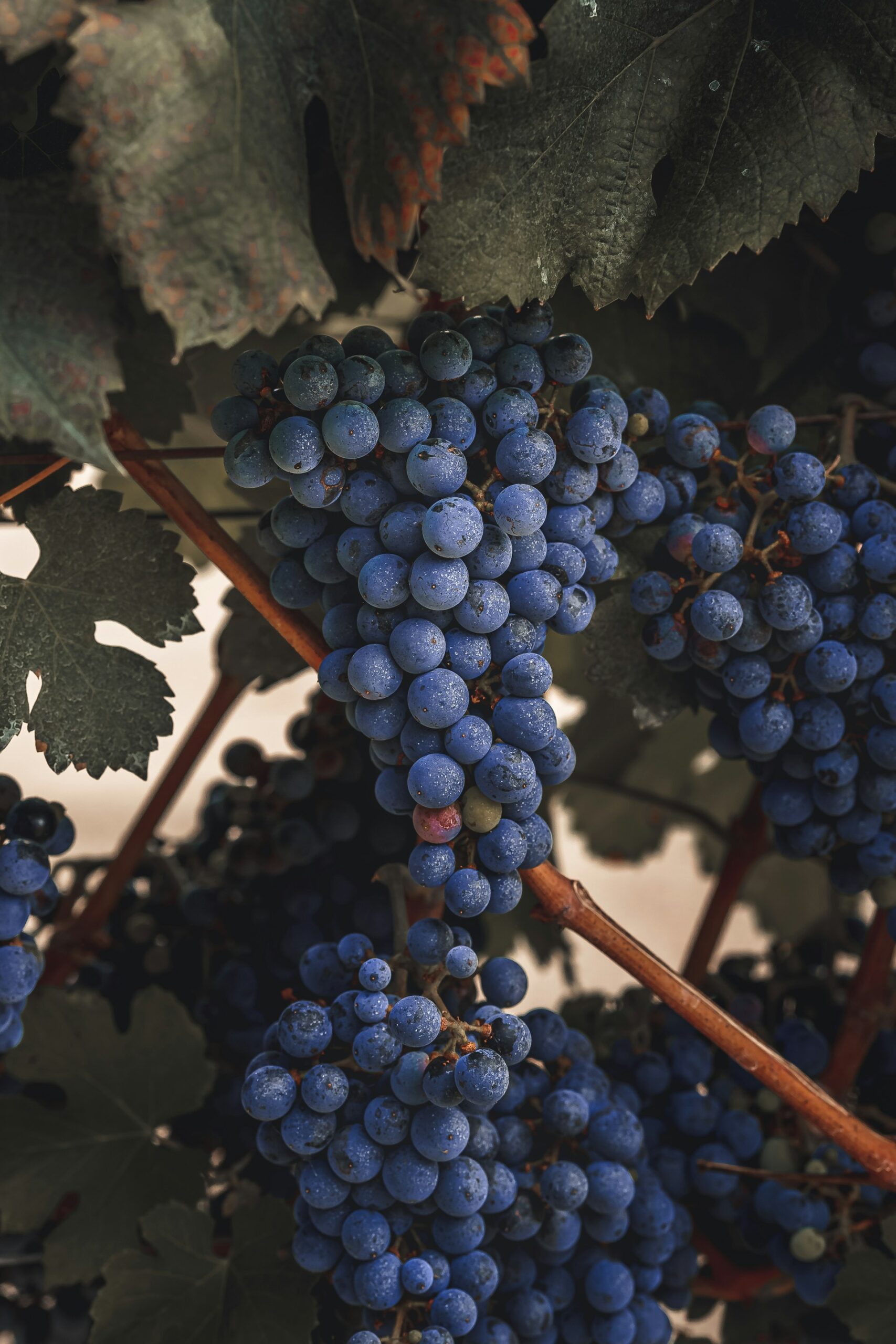
Bordeaux forms the historical core in the context of Europe and Merlot. Merlot plays the leading role on the right bank - for example in Saint-Émilion and Pomerol. The grapes ripen on limestone and clay soils, developing juicy flesh and fine skins. The result: wines with dark cherry fruit, ripe tannins and a smooth mouthfeel.
On the left bank, in the Médoc, Cabernet Sauvignon dominates. However, Merlot also influences the grape consistency of the cuvées there by rounding off the structure and providing a fuller centre on the palate. In great years, many of Europe's most iconic cuvées originate from this region - supported by a balanced interplay of varieties.
South of France: Mediterranean warmth in a glass
In Languedoc and Roussillon, Merlot often grows in warmer locations. Here, the grapes have a softer consistency, higher must weight and milder acidity. This results in accessible, fruit-accentuated wines, which go wonderfully with uncomplicated evenings and Mediterranean cuisine.
If you are curious about Mediterranean styles, Feiniwy offers a selection of French wines full of character in the French wine, that reflect this diversity.
Merlot in Italy: Europe between tradition and modernity
Italy brings an exciting addition to the European picture. In Tuscany, international grape varieties such as Merlot and Cabernet share the stage with Sangiovese. In the coastal areas of Maremma, Merlot grapes display a juicy, concentrated consistency, often with ripe tannins and dark fruit.
Typical Italian Merlot flavours:
- Black cherry, blackberry, plum
- Laurel, Mediterranean herbs, sometimes graphite
- Chocolate and coffee through barrique ageing
Merlot from northern Italy - for example from South Tyrol or Friuli - has a cooler and more linear appearance. The grapes remain more compact, the berry skins denser. This results in elegant, structured wines, which go perfectly with Alpine cuisine and finely composed menus.
If you would like to experience this range in practice, you will find the following in the Italian wine Numerous examples with detailed descriptions.
Spain, Austria, Switzerland: European heads of character
Spain: Sun and depth
Spain has historically favoured Tempranillo and Garnacha, but in regions such as Ribera del Duero and Navarra, a growing number of winemakers are working with Merlot. The continental altitude of the Meseta produces berries with thicker skins and high flavour density.
The wines show:
- dark berry fruit, stewed plums
- Spicy notes, often vanilla and roasted flavours from the wood
- Rich, warm texture
In the Feiniwy range you will discover Spanish wine online Merlot cuvées that represent precisely this combination of depth and warmth.
Austria: Precision and structure
In Austria, Merlot grows in selected locations with a warm microclimate, for example in Burgenland or Carnuntum. Cool nights preserve the acidity, while sunny days ensure ripe tannins. The grapes have a compact consistency, which makes the wines Exciting and lively has an effect.
Switzerland: Terroir in miniature
Switzerland brings Europe to the glass in miniature. Fascinating interpretations of international grape varieties are created on Lake Geneva, in Valais, in Ticino and in the Bündner Herrschaft.
Merlot plays a particularly important role in Ticino and in selected parcels in other regions. The grapes combine Alpine freshness with Mediterranean ripeness, resulting in delicate wines characterised by their terroir. In our category Swiss wine you will find Merlot interpretations that demonstrate this balance in an impressive way.
Typical flavour characteristics: How to read Merlot from Europe
Colour and viscosity
When pouring, the colour provides the first clues as to origin and ageing:
- Cooler Europe: clearer ruby red, slightly transparent at the rim
- A warmer Europe: denser, darker ruby, sometimes almost violet
- Maturity and ageing: garnet reflexes appear with storage, heavy tears indicate higher extract and alcohol
The viscosity in the glass reveals how concentrated the juice in the grape was and how much substance the wine has.
Fragrance profile
Merlot from Europe covers a broad spectrum, which can be roughly categorised as follows:
- Primary flavours: cherry, plum, blackberry, red berries
- Secondary flavours (fermentation, ageing): dark chocolate, coffee, vanilla, smoke
- Tertiary flavours (maturation): Leather, tobacco, undergrowth, dried herbs
The cooler the region, the more precise and clear the fruit; the warmer, the more opulent and jammy the flavours.
Palate structure
The grape consistency is directly reflected in the mouthfeel:
- Soft, ripe grapes: Round tannins, full-bodied centre, smooth finish
- Compact, tight bunches: higher acidity, noticeable tannin, clear structure
Merlot from Bordeaux or Tuscany often combines both: ripe fruit plus a supporting structure. In cooler regions of Europe, a more straightforward style emerges that is an excellent accompaniment to food.
If you would like to delve deeper into the topic of combinations, you can find more information in the article Wine and cheese - the best pairings for gourmets suitable inspiration.
How Europe controls the cultivation of Merlot
Vineyard sites and microclimate
In Europe, Merlot cultivation is characterised by the following factors:
- Proximity to large bodies of water (Atlantic, Mediterranean, lakes) with a balancing effect on temperatures
- Slopes and exposure that influence solar radiation and wind
- Soils from gravel to limestone and clay to slate, which regulate water and nutrients
Winegrowers consciously utilise these conditions. In more humid climate zones, permeable gravel or slate soils allow the vines to root deeply and the grapes to ripen in a concentrated manner. In drier regions, loamy soils ensure water retention and an even supply.
Harvest time and degree of ripeness
In a continent-wide context such as Europe, the time of harvest depends on several factors:
- Sugar content and potential alcohol
- Physiological ripeness of the tannins
- Acid structure
- Health status of the grapes
Merlot reacts sensitively to overripeness. In warmer regions, winegrowers take care not to harvest too late so that the wine remains juicy and does not become heavy. In cooler regions, a slightly later harvest helps to avoid green tannins and to gain fullness.
Wine knowledge for connoisseurs: How to taste Europe in Merlot
Step 1: Consciously choose your origin
Think about which style suits you before you buy:
- Search for Elegance and freshness? Then you tend to favour cooler regions such as parts of Switzerland, Austria or northern Italy.
- Do you prefer Depth and maturity? Then go for Merlot from Bordeaux, Tuscany or from strong Spanish regions.
Our categories Buy red wine and especially Spanish red wine help you to filter Merlot and cuvées by origin.
Step 2: Sensory analysis with a focus on grape consistency
When tasting, it is worth taking a mental step back into the vineyard:
- Does the wine feel Juicy and smooth on? Then the berries were rather soft, with ripe flesh.
- Does the wine work firm, with grippy tannins? Then compact berries with dense skins characterised the style.
- Experience High freshness and coolness on the palate? Then the climate and harvest time come through clearly.
Step 3: Choice of dishes according to European style
Typical combinations for Merlot from Europe:
- Bordeaux or Tuscan Merlot with beef, lamb, braised poultry
- cooler Merlot styles with mushroom dishes, risotto, pasta with tomato and herb sauces
- softer, Mediterranean variations with grilled vegetables, lasagne, antipasti
For gourmets, our contributions to Wine and menu planning valuable additions, such as the guide Red wine or white wine with your meal?
Europe in tension: enjoyment despite crises
Europe is currently experiencing turbulent times: Conflicts at the external borders, discussions about energy supply, security policy issues. At the same time, winegrowers are looking after their vines with patience and continuity.
Especially in times of unrest, a consciously chosen glass of Merlot from Europe offers a moment of anchoring. The wines combine history, craftsmanship and regional culture, creating a counterpoint to short-lived headlines.
As a small, specialised company, Feiniwy curates precisely those wines that stand the test of time. We work closely with producers whose work we know from our own experience and bring this selection to your home.
Purchasing and storage: How to get the best out of Merlot in Europe
Purchasing in the premium segment
Anyone who specifically selects high-quality Merlot wines from Europe pays attention to:
- Origin and location (e.g. Bordeaux appellations, certain DOC/DOCG in Italy, selected Swiss and Austrian regions)
- Vintage and climatic peculiarities this year
- Expansion type (steel tank, large wood, barrique)
- Vintner's manuscript and philosophy
In the Feiniwy shop you will find detailed information on origin, ageing and style. Transparent descriptions and a selective product range make the choice easier for connoisseurs who shop consciously.
Storage at home
In order for Merlot from Europe to develop its full potential, storage plays a central role:
- Store the bottles horizontally at a constant temperature of 12-14 °C
- Avoid light, vibration and strong odours
- Allow structured wines from Bordeaux, Italy or Switzerland to rest for a few years
If you would like to delve deeper into this topic, you can find more information in our article „10 tips for storing wine properly at home“ practical tips - this will soon be published in the Feiniwy blog section and is the ideal complement to this wine knowledge.
Merlot in comparison: Europe and other continents
Even though the focus of this article is on Europe, Merlot can be better categorised as a global grape variety if you know the comparison. In comparison to overseas wines (such as those from Chile or California), Merlot from Europe:
- more Structure and freshness
- Clearer characterisation of origin
- finer balance between fruit, acidity and tannin
Europe stands for balance instead of exaggeration. This restraint appears quieter at first, but convinces with depth and complexity - especially when you enjoy the wines with food.
Curated recommendations: How to find your European Merlot style at Feiniwy
The Felber wine office regularly samples new wines from Europe, evaluating grape consistency, typical flavour characteristics and overall harmony. This is a great advantage for you as a customer: You will receive a preselection that combines quality, character and originality.
For example, orientate yourself like this:
- For Bordeaux lovers: Structured, dense Merlot cuvées with ageing potential
- For Italy fans: powerful but elegant Merlot wines from Tuscany or northern Italy
- For explorers: Swiss and Austrian interpretations of Merlot with a clear mark of origin
- For uncomplicated enjoyment: Mediterranean-influenced Merlot wines with soft tannins and lots of fruit
In the area Buy white wine complementary white wines from the same regions enhance the flavour experience if you are planning a menu based around Europe.
Frequently asked questions about Europe, Merlot and wine knowledge
Frequently asked questions about Merlot and wine knowledge in Europe
Where is Europe located and why does the continent play such an important role for Merlot?
Europe stretches geographically from the Atlantic to the Urals and from the North Cape to the Mediterranean. Within this continent are the historical core regions of viticulture that have characterised Merlot: Bordeaux, Italy, Spain, parts of Switzerland and Austria. The combination of climate, soils and centuries of experience makes Europe a reference point for stylistically diverse but always balanced Merlot wines.
What are the typical flavour characteristics of European Merlot?
European Merlot usually shows Flavours of cherry, plum and dark berries, often complemented by notes of herbs, chocolate or tobacco. In cooler regions, freshness and clear fruit come to the fore; in warmer zones, ripe, almost stewed fruit tends to take centre stage. The tannins are softer than in Cabernet Sauvignon, the acidity harmonious, the body medium to full-bodied - ideal for connoisseurs who appreciate elegant fullness.
How does grape consistency influence the flavour of Merlot in Europe?
The consistency of the grapes determines how much juice, tannin and flavour are present in the wine. In cooler parts of Europe, mostly Compact berries with dense skin, This leads to Merlot wines that are rich in structure and tension. In warmer regions, softer, juicier grapes develop, which ensure round tannins and a full-bodied mouthfeel. The denser the grape, the more grippy the tannin; the softer the berry, the smoother the wine.
Which European countries are particularly suitable for growing Merlot?
In Europe, Merlot shows particularly convincing results in France (Bordeaux and selected regions of southern France), in Italy (Tuscany, northern Italy), in parts of Spain, in Austria (for example in Burgenland) and in Switzerland, especially in Ticino and the Bündner Herrschaft. These countries combine suitable climate zones with experienced winegrowers who precisely control the cultivation and maturation of the variety.
How can I recognise when tasting a Merlot whether it comes from a cooler or warmer region of Europe?
Pay attention to three points: Fruit image, acidity and tannin structure. Cooler regions usually produce lighter, fresher fruit, noticeable but fine acidity and firmer tannins. Warmer parts of Europe produce dark, ripe fruit, softer acidity and supple tannins. If in doubt, a look at the label and designation of origin will help, but experienced connoisseurs are increasingly able to read the climate zone directly from the colour, aroma and mouthfeel.
Which dishes go particularly well with Merlot from Europe?
Merlot from Europe is a versatile accompaniment: structured Bordeaux or Tuscan Merlot goes well with beef, lamb, game and braised poultry dishes. Mediterranean-influenced varieties harmonise with pasta, grilled vegetables, pizza and lasagne. Cooler, stylised Merlot wines from Switzerland or Austria pair well with mushroom dishes, risotto, hearty vegetarian dishes and medium-strong cheeses. The balance between the intensity of the dish and the body of the wine remains important.
How do I deepen my knowledge of Merlot and other European wines?
If you want to expand your knowledge of European wines, there are three ways to do this: consciously tasting different origins, keeping your own tasting notes and reading well-founded background texts. Feiniwy supports you with curated product ranges, detailed product descriptions and blog posts on topics such as sparkling wines, wine storage, food pairing and differences between red and white wines. Step by step, they develop a sure feel for the origin, grape consistency and typical flavour characteristics of European wines.
///Comment: Tips for external links for E-E-A-T
- https://www.oiv.int - International Organisation of Vine and Wine; background information on global and European viticulture. Suitable installation after the section „Europe as the cradle of modern viticulture“.
- https://ec.europa.eu/info/food-farming-fisheries/plants-and-plant-products/plant-products/wine_de - Information page of the European Commission on the wine sector in Europe, focussing on origin and legal framework conditions. Useful after the section „How Europe controls the cultivation of Merlot“.
- https://www.blw.admin.ch/blw/de/home/themen/marktpolitik/wein.html - Federal Office for Agriculture (Switzerland) with data and information on Swiss viticulture. Suitable in the section on Switzerland as part of the European Merlot landscape.
- https://www.hochschule-geisenheim.de/forschung/institute/rebenzuechtung-und-rebanbau/ - Specialist information from Hochschule Geisenheim University on viticulture and grape varieties, for in-depth information on grape consistency and cultivation. Suggested installation after the section „Understanding grape consistency“.
- https://www.bzfe.de/ernaehrung/essen-und-trinken/lebensmittel/getraenke/wein - Federal Centre for Nutrition with easy-to-understand information on wine, sensory analysis and enjoyment. Fitting after the section „Wine knowledge for connoisseurs: How to taste Europe in Merlot“.
Wines at fair and transparent prices
feiniwy.ch
Felber wine office
feiniwy.ch