No products in the cart.
How to taste wine properly: A beginner's guide
- Tasting
- All contributions
One Wine tasting for beginners often seems complex: technical terms, rituals, etiquette. At the same time, there is a growing desire to enjoy wine more consciously, discover your own taste and select high-quality bottles - for dinner parties, gifts or your own wine cellar at home. This guide from Feiniwy accompanies you step by step in a well-founded and relaxed manner.
Aim of your wine tasting: enjoyment, orientation, safety
Before you reach for the corkscrew, clarify three goals for yourself:
- IndulgenceExperience wine consciously, don't drink it „on the side“.
- OrientationFind out which styles suit you - fresh white wines, elegant red wines, fine champagne, rosé, non-alcoholic sparkling wine.
- Safety when shoppingUnderstanding labels, assessing qualities and making confident choices in the premium segment.
Especially if you choose high-quality wines in the premium range, a structured wine list will support you. Wine tasting for beginners, so that you get maximum enjoyment from every bottle. In the Feiniwy range you will find a curated selection of White wines, Red wines, Rosé wines and Sparkling wine and champagne, that are perfect for your tasting - take a look at categories such as white wines or Sparkling wines and champagne provides you with suitable candidates immediately.
Preparation: frame, glasses, choice of wine
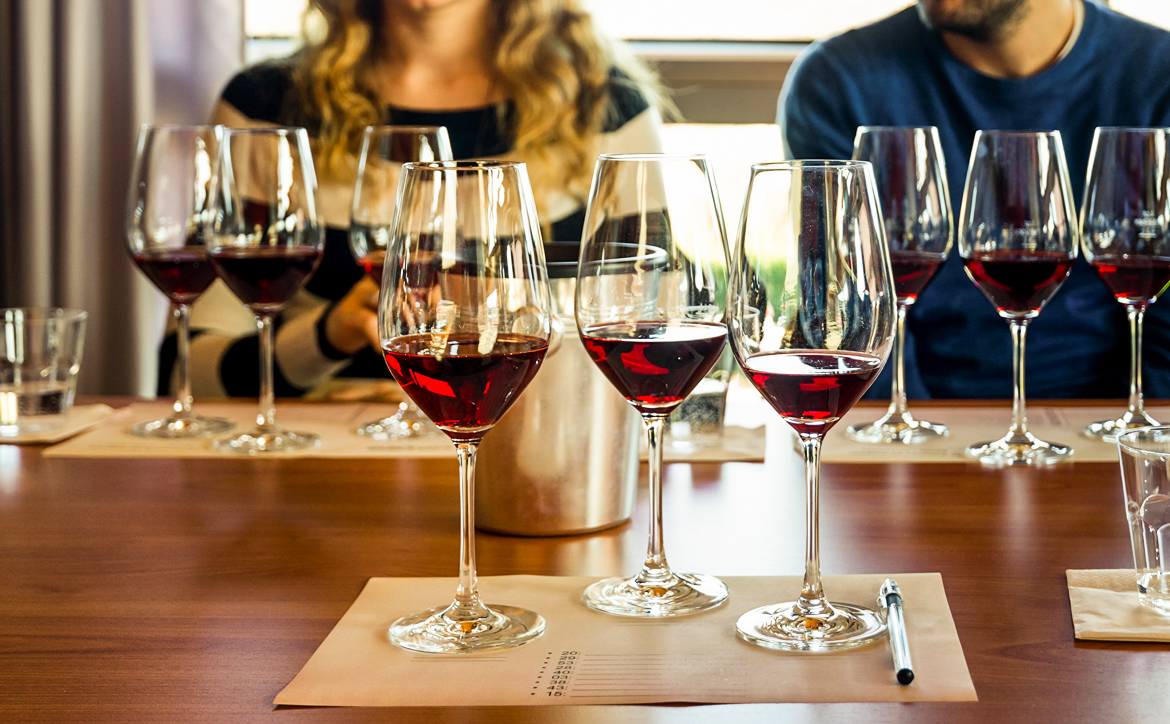
The right setting for your private wine tasting
For focussed tasting at home:
- Quiet room without extraneous odours (kitchen only if not used for fresh cooking).
- Bright, neutral light, ideal daylight.
- Light background (tablecloth, paper) to see the colour of the wine clearly.
- No perfume, no scented candles - otherwise you will only perceive your perfume instead of the aromas.
Plan 60-90 minutes in which you can concentrate only on your Wine tasting for beginners without rushing, without multitasking.
Glasses, water, bread - your basic set
You don't need a complete professional set to get started, but:
- Tulip-shaped glasses with stem, clear, thin-walled, not too small. A universal white wine glass is usually suitable for white, rosé and light red wines.
- Water (still) to neutralise the palate and stay sufficiently hydrated.
- Neutral bread or grissini, unsalted, without garlic or herbs.
Grab the glass on a stick, not on the goblet. This way you don't heat the wine unnecessarily and you can see the colour better.
Which wines are suitable for beginners?
You start with 3 to 5 wines. Ideal:
- A fresh white wine (e.g. Sauvignon Blanc, Pinot Grigio, an elegant Chardonnay).
- A fine rosé, for example from Provence or Switzerland.
- A light, fruity red wine (e.g. Pinot Noir / Pinot Noir, Zweigelt).
- Optional: A sparkling wine or champagne as a tingling starter.
Wines with clear fruit, moderate alcohol and soft tannins are particularly suitable. You will find many beginner-friendly styles in the Feiniwy selection - browse through the Italian red wines under Red wines from Italy or in the Rosé wines from France under French rosé wines.
The ideal order for your wine tasting
Many beginners ask: „In what order do you do a wine tasting?“ The structure helps your senses:
- Light sparkling wine or non-alcoholic sparkling wine
- Light, fresh white wines
- Stronger, matured white wines
- Rosé wines
- Light red wines
- Strong red wines with more tannin
- Sweet or dessert wines
Within each group, the following applies simpler to the more complex, from dry to the sweeter Wine. If you have a small private wine tasting with friends, a sequence like this is often enough:
- 1 sparkling wine
- 2 white wines
- 1 Rosé
- 1 red wine
This keeps your attention levels high without tiring your senses.
The 5 steps of wine tasting - explained in a practical way
Many advisors speak of the 5 rules of wine tasting. Essentially, they boil down to five steps that you can easily memorise: See - Swirl - Smell - Taste - Reverberation.
Seeing - colour and clarity
Hold the glass at an angle over the light-coloured background.
- ColourFor white wine from pale lemon yellow to golden yellow, for red wine from cherry red to deep garnet red, for rosé from salmon colour to raspberry pink.
- ClarityDoes the wine appear brilliant and clear or cloudy?
- Viscosity („church window“): The „tears“ that run down the glass wall after swirling indicate the alcohol and extract content.
You don't have to name every nuance. It's enough if you notice differences - and note them down for yourself.
Swirl - release flavours
Place the glass on the table and swirl it gently or swivel it in your hand. The aim is to introduce oxygen so that more fragrances are released.
Important:
- Only fill the jar to about one third.
- Pivot calmly, not frantically.
Your first impressions are formed even before you put your nose in the glass.
Smell - discover the interplay of flavours
Now comes the most emotional part of your Wine tasting for beginners. Hold your nose to the edge of the glass and take one or two conscious breaths.
Above all, you take:
- Fruit flavours (apple, pear, citrus, stone fruit, berries, dark fruits)
- Floral notes (white flowers, rose, elderberry)
- Seasoning and herbs (pepper, vanilla, thyme, mint)
- Roasted and woody notes (toast, coffee, chocolate, smoke)
- Mineral flavours (wet rubbed stone, chalk)
Don't start academically, but personally: what everyday things does the fragrance remind you of? Write down two or three keywords - your personal aroma memory is created.
Flavour - structure, balance, texture
Many newcomers ask: „How to taste wine for beginners?“ Your mouth provides the answers. Take a small sip and spread the wine throughout your mouth.
The most important basic elements
Watch out for:
- Sweetnessfrom bone dry to distinctly sweet.
- AcidFreshness, liveliness, „lemon kick“.
- Tannin (especially with red wine): Tannins that leave the tongue and palate feeling dry.
- BodyLight, medium or full, comparable to the „body fullness“ of milk (water - whole milk - cream).
- AlcoholWarmth in the throat or balanced integration.
Then judge the BalanceDoes the wine appear harmonious or does one element dominate?
The reverberation
Swallow the wine (at small private tastings you usually swallow, at large professional events you work with a spittoon). Mentally count the seconds in which you can still clearly perceive the flavour.
- Short: 1-3 seconds
- Medium: 4-8 seconds
- Long9 seconds and more
A long, finely fading finish is a sign of quality. At the end, you ask yourself: Would you like another sip right away?
Practical table: procedure and focus of your wine tasting
| Step | Action | What you look out for |
|---|---|---|
| Preparation | Choose wines, glasses, water, bread | Variety of styles, drinking temperature, tranquillity |
| 1. see | Tilt glass, against light background | Colour, clarity, viscosity |
| 2. swivelling | Wine circling in a glass | Fragrance intensity increases |
| 3. smelling | Nose to the edge, breathe consciously | Fruit, flowers, spices, wood, minerality |
| 4. taste | Small sip, move in the mouth | Sweetness, acidity, tannin, body, texture |
| 5. reverberations & notes | Evaluate impression, write down | Length, harmony, personal favour |
Use a piece of paper or a notebook. After ten tastings, you will recognise which types of wine really suit you.
Drinking temperature and serving rules for beginners
Temperature has a massive influence on your flavour experience. A few guidelines:
- Sparkling wine / Champagne: 6-8 °C
- Light white wines, rosé: 8-10 °C
- Stronger white wines: 10-12 °C
- Light red wines: 14-16 °C
- Strong red wines: 16-18 °C
Refrigerator temperature is usually around 5-7 °C. Therefore use white wine and rosé 20-30 minutes before consumption out. At modern room temperatures, red wine often cools down better to the right drinking temperature in the fridge.
In the category Red wines you will find detailed information on many wines to help you assess the style and ideal temperature.
Common wine tasting mistakes - and how to avoid them
Especially with a Wine tasting for beginners similar stumbling blocks appear:
- Too many winesSix to eight bottles quickly overwhelm the palate. Three to five is usually enough.
- No water, no breadWithout neutralisation, impressions become blurred.
- Strong fragrances in the roomAvoid perfume, kitchen odours and scented candles.
- Red wines that are too warm, white wines that are too cold: Follow the guidelines in section 7.
- Big gulpsA small sip is enough for the analysis.
Plan your next tasting so that every wine has its own stage. If you serve wines in the premium segment - such as the selected champagnes and sparkling wines under French sparkling wines & champagne - gives pleasure, not quantity.
Which wines are suitable as an introduction?
Many people ask: „Which wine is recommended for beginners?“ A few tried and tested entry styles:
White wine
- Sauvignon Blanc: Fresh, aromatic, notes of gooseberry, citrus.
- Pinot Grigio / Pinot Gris: Mild, fruity, uncomplicated.
- Chardonnay without strong wood: Creamy, with apple and citrus notes.
Rosé wine
- Provence-Rosé: Delicate, dry, red-berry flavoured and elegant.
- Rosé from Switzerland or Italy: fresh, versatile, ideal for convivial evenings.
Red wine
- Pinot Noir / Pinot Noir: Fine berry fruit, rather delicate tannins.
- Zweigelt or other light red wines: Fruity, soft, hardly astringent.
Sparkling wine
- Prosecco or high-quality sparkling wine: fruity, lively, uncomplicated.
- Premium champagne from the Feiniwy range for special moments.
If you want to get an overview of different styles, mixed orders of Red, white and rosé wines you put together your own personal starter set, for example from the selection of French white wines and Spanish red wines together.
Wine and food - skilfully using cheese, olive oil & co.
Many wine lovers combine the first Wine tasting for beginners with a small tasting of cheese and fine food. Three basic principles:
- Light wines - light dishes
Delicate fish or fresh vegetable dishes go well with fresh white wines and rosé. - Strong wines - strong dishes
Braised meats, mature hard cheeses and intense sauces harmonise with structured red wines. - Acid & fat
Wines with fresh acidity „cut through“ fatty foods - ideal with cheese or dishes with high-quality olive oil.
In addition to wine, Feiniwy also Selected olive oils, that round off your tasting with culinary delights. A look at the category Olive oil inspires you for suitable companions.
Train your sensory skills: Notes, comparison, repetition
Wine tasting thrives on repetition and comparison. Three approaches will help you to improve in a targeted manner:
Vertical or horizontal comparisons
- Same grape variety from different regions (e.g. Merlot from Italy, Spain, Switzerland).
- Different vintages of a wine from the premium segment.
Flavour training at home
- Consciously smell fruit, herbs, spices, coffee, chocolate.
- Transfer these impressions to your wine descriptions at the next tasting.
Keep notes
- Name of the wine, vintage, region, grape variety.
- Three to five keywords for aroma, flavour, reverberation.
- Personal rating (scale 1-10).
The more clearly you formulate, the quicker you can recognise lines: do you prefer more mineral white wines, creamy Chardonnays or structured red wines from regions such as the Ribera del Duero, from which Feiniwy has several high-quality positions.
Wine tasting as an experience: at home or in a seminar
Whether you use your Wine tasting for beginners as an intimate round at home or attend a professional wine seminar - the process remains similar. At home you control the atmosphere and selection, at the seminar you benefit from the moderator's expertise and meet other wine lovers.
Tips for your home tasting:
- Determine the theme and number of wines.
- Print out simple tasting sheets.
- Please ask guests to refrain from using perfume.
- Provide water, bread and cheese if necessary.
If you then feel like attending more in-depth workshops, a sound basic knowledge will give you the perfect starting point for asking questions and evaluating recommendations.
Frequently asked questions about wine tasting for beginners
In which order do you do a wine tasting?
As a rule, start with sparkling wine, followed by light white wines, then stronger white wines, rosé, then light red wines and finally strong red wines or sweet wines. This way, the tannins and alcohol won't overwhelm your senses and you'll be able to better appreciate the subtle flavours of the light wines. Four to five wines are sufficient for a wine tasting for beginners: for example, one sparkling wine, two white wines, one rosé and one light red wine.
What are the 5 rules of wine tasting?
Five simple rules for every wine tasting for beginners:
- Quiet and neutral environment without foreign odours.
- The right sequence: from light to powerful, from dry to sweet.
- Observe the five steps: sight, swirl, smell, taste, reverberation.
- Water and bread to neutralise between the wines.
- Make notes to record favourite wines and preferred styles and later select high-quality wines - for example from the Feiniwy range.
Which wine is recommended for beginners?
Wines with clear fruit, moderate alcohol and soft tannins are suitable for beginners. For white wines, Sauvignon Blanc, Pinot Grigio or Chardonnay without heavy wood are popular. For red wines, Pinot Noir or Zweigelt offer a gentle start. Elegant, dry Provençal styles are suitable for rosé. In the categories white wines, Red wines and Rosé wines you will find a curated selection of such beginner-friendly wines.
How to taste wine for beginners?
Pour a small amount of wine into the glass, look at the colour and clarity, swirl briefly and smell consciously. Then take a small sip, spread it all over your mouth and pay attention to sweetness, acidity, body and texture. Feel how long the flavour lasts. This way, a wine tasting for beginners is structured without being stiff. With every wine you taste, your confidence will grow - as will your enjoyment if you choose high-quality wines from the Feiniwy portfolio.
Wines at fair and transparent prices
feiniwy.ch
Felber wine office
feiniwy.ch