

No products in the cart.
feiniwy.ch
Grape varieties - Sauvignon Blanc
- Wine knowledge
- All contributions
The Sauvignon Blanc Grape variety stands for distinctive flavours, clear structure and enormous diversity in the glass. For wine lovers in Switzerland, it is one of the most exciting white grape varieties because it produces very different but always characterful wines from the cool Loire Valley to Marlborough and Styria.
Origin of the Sauvignon Blanc grape variety and its distribution
Sauvignon Blanc originates historically from France, most likely from the Loire Valley. From there, the grape variety found its way to Bordeaux before conquering Europe and later the New World. Today it belongs to Sauvignon Blanc is one of the world's most important white wine grapes, with relevant areas in, among others:
- France (Loire, Bordeaux, south-west France)
- Italy and Austria
- Germany and Switzerland
- New Zealand, Australia, South Africa, Chile and USA
In Switzerland, the variety has been gaining in importance for several years, especially in cooler locations, where it retains its freshness and develops its typical, intense flavour. For quality-conscious connoisseurs our range of white wines The basis for comparing Sauvignon Blanc styles from different regions and finding your own favourite.
What kind of grape is Sauvignon Blanc?
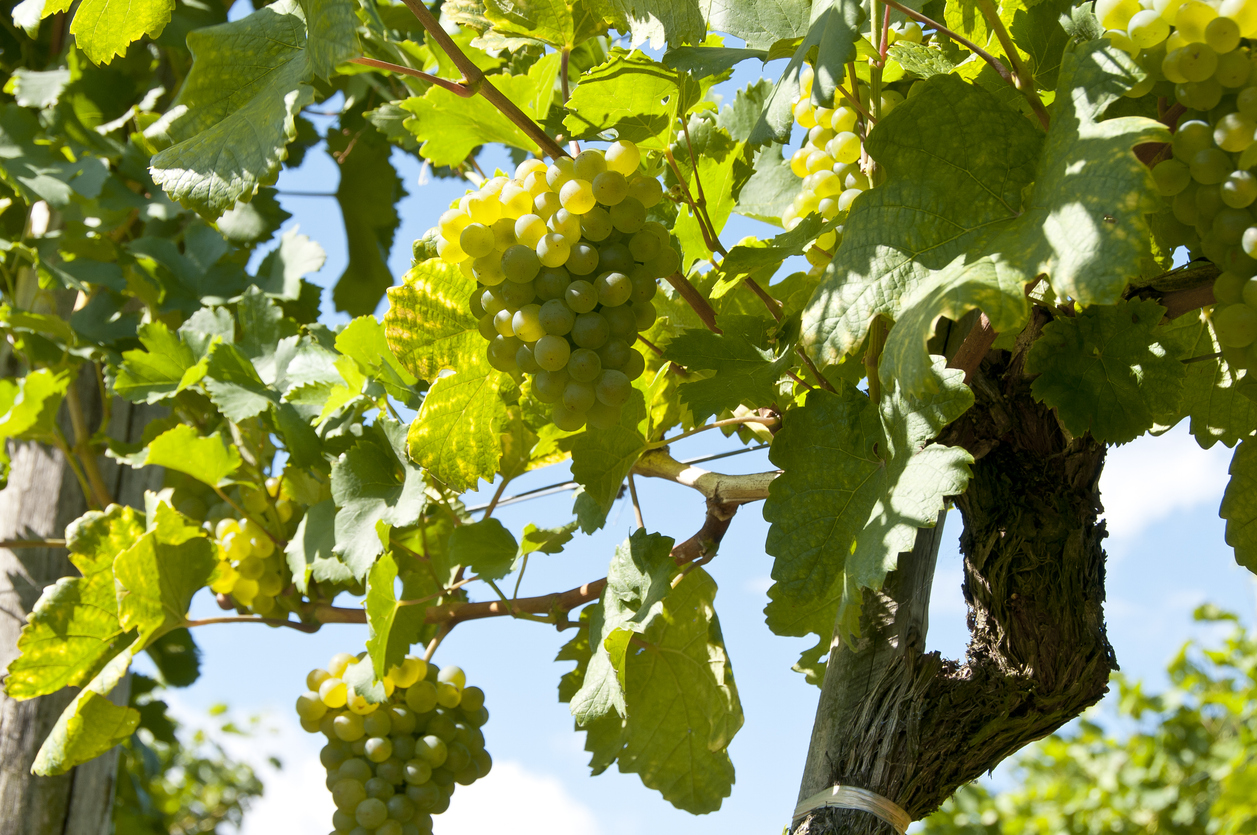
Sauvignon Blanc is a white, aromatic grape variety with rather small, dense berries and thicker skin. The grapes produce must:
- pronounced acidity
- moderate to medium alcohol
- high concentration of flavour precursors (especially thiols and pyrazines)
These chemical compounds are responsible for the typical flavours of gooseberry, cassis leaf, freshly cut grass, green pepper and exotic fruits. For quality-orientated winegrowers, the Sauvignon Blanc Grape variety therefore offers a broad spectrum of styles - from razor-sharp and mineral to lush tropical fruit.
Sauvignon Blanc other name - synonyms and confusion
The grape variety has different names depending on the region. Important synonyms and designations:
- Blanc Fumé or Fumé Blanc: especially in the Loire Valley and parts of the New World
- Sauvignon Jaune: historical designation
- In designations of origin such as Sancerre or Pouilly-Fumé Sauvignon Blanc is often in the glass without the name of the grape variety appearing on the label.
There have been repeated confusions with similar varieties such as Sauvignonasse (today mostly Friulano) or Savagnin blanc. DNA analyses in recent decades have clarified the situation, but Sauvignon Blanc remains the common, internationally understood name in the trade.
Sauvignon Blanc Description: Typical aromas and Sauvignon Blanc flavour
The Sauvignon Blanc flavour ranges from cool and herbal to exotic and opulent. The range results from the interplay of climate, soil, harvest time and ageing.
A brief sensory description of varietal wines:
- Colour: light lemon yellow to pale straw yellow, somewhat more intense in more mature wines or wines matured in wood
- Nose: distinct, clear aromas of gooseberry, lime, grapefruit, cassis leaf, green pepper, nettle, freshly cut grass; depending on origin, also passion fruit, mango, stone fruit and mineral flint notes
- Palate: high, lively acidity, mostly dry, lean to medium-bodied, concise, aromatically lingering finish
Connoisseurs who appreciate freshness, clarity and aromatic precision will find the Sauvignon Blanc grape variety an ideal white wine partner - especially in contrast to creamier varieties such as Chardonnay. You can find an in-depth look at these differences in the article Chardonnay grape variety in the blog of Weinbüro Felber.
Is Sauvignon Blanc a dry white wine?
In practice, the answer is almost always Yes, Sauvignon Blanc is predominantly a dry white wine. The stylistic tradition in the most important growing regions is based on:
- fully fermented, dry wines with a few grams of residual sugar
- Clear, taut structure that emphasises the acidity
- Aromatic density, without a sweet impression
There are exceptions, such as late-harvest or noble sweet varieties from cool vintages, but they remain niche products. When choosing a wine for everyday consumption, you can assume that a Sauvignon Blanc on the market is dry, unless the label states otherwise.
What colour berries does Sauvignon Blanc have?
Sauvignon Blanc clearly belongs to the white grape varieties. The berries:
- have greenish-yellow shells
- turn a light golden colour when fully ripe
- may show golden-brown sun cheeks in places
White wines are made from this grape, rosé or red wines are based on other varieties. Mutations such as Sauvignon Gris or Sauvignon Rose have reddish-coloured berries, but remain in the white wine range because the skins release comparatively little colouring.
Difference between Sauvignon and Sauvignon Blanc - and is Sauvignon Blanc Pinot Blanc?
In linguistic usage, there are occasional abbreviations or confusion:
- „Sauvignon“ without addition usually means Sauvignon Blanc in everyday wine life, but is imprecise.
- Cabernet Sauvignon is an independent, red grape variety, developed from a cross with Sauvignon Blanc, among others.
- Is Sauvignon Blanc Pinot Blanc? No. Pinot Blanc belongs to the Burgundy family and produces rather subtle, nutty, restrained white wines. Sauvignon Blanc is aromatically much more expressive and fresher.
When selecting wines in the premium segment, it is advisable to use precise labelling. In our online shop, we make a consistent distinction according to grape variety so that you can accurately France-White wines, Sauvignon Blanc from overseas or European alternatives.
Sauvignon Blanc with fish and other dishes
Sauvignon Blanc is a versatile food companion that goes particularly well with light dishes thanks to its fresh acidity and aromatic conciseness. The combination Sauvignon Blanc with fish is one of the classics of fine cuisine.
Ideally suited:
- Fine freshwater fish (e.g. whitefish, perch) with herbs
- Sea fish with citrus butter, fennel or tomatoes
- Seafood, oysters, mussels
Sauvignon Blanc also harmonises well:
- Goat's cheese and fresh sheep's cheese
- Vegetable dishes with asparagus, peas, green asparagus or artichokes
- Asian dishes with lime, coriander and light spiciness
If you would like to learn more about the topic of food pairing, our guide Wine and cheese - the best pairings additional inspiration for delicious combinations.
Style worlds of the Sauvignon Blanc grape variety: Loire, Styria, Marlborough & Co.
The greatest strengths of the Sauvignon Blanc Grape variety their stylistic diversity. Three important poles:
| Origin | Typical stylistics | Flavour |
|---|---|---|
| Loire (Sancerre, Pouilly-Fumé) | taut, mineral, precise, dry | Citrus, stone fruit, flint, herbs |
| Styria, Switzerland, cool Alpine locations | fresh, clear as a bell, elegant | Gooseberry, cassis leaf, meadow herbs |
| Marlborough, New World | Fruity, intense bouquet | Passion fruit, grapefruit, exotic fruits |
For connoisseurs, a direct comparison in the glass is worthwhile. About our range Buy wine online you can easily put together a personalised Sauvignon Blanc vertical from different regions and experience the range of this grape variety at home.
Sauvignon Blanc pronunciation - this is how the grape variety sounds right
The pronunciation of French grape varieties is particularly uncertain. The following applies to Sauvignon Blanc in German:
- „Soh-wi-jon blahn“ (with a soft „n“ at the end)
- Emphasis on the last syllable of „Sauvignon“ and on „Blanc“
Anyone who wants to be confident in the specialised trade or in a restaurant will benefit from this correct pronunciation, especially if Loire wines such as Sancerre or Pouilly-Fumé are on the menu.
Buying a Sauvignon Blanc vine - what you should look out for
Anyone who thinks about it, Sauvignon Blanc vine to buy, The aim is usually twofold: to grow your own grapes on a small scale or to gain a deeper understanding of the variety in your garden or on the wall of your house. Decisive for success:
- Climate and location: cool to temperate location, no heat traps
- Floor: well drained, not too heavy, experience from Loire and Styria shows the advantage of calcareous, stony soils
- Clones and rootstocks: Depending on the region, there are selections with different yield expectations and flavour profiles
For quality-orientated consumers, purchasing finished wines is usually the more sensible choice. The vinification of the Sauvignon Blanc grape variety requires precision in the harvest, cool ageing in stainless steel or the sensitive use of wood. Instead of plants, you will find a curated selection of finished wines in our shop, which already fulfil these requirements at the highest level in the vineyard and cellar.
Sauvignon Blanc compared to other white wine grape varieties
In the glass, Sauvignon Blanc is positioned between more neutral varieties such as Silvaner or Chasselas and more powerful, wood-accentuated Chardonnays. In comparison:
- to Chardonnayless creamy, less wood character, but more herbs, citrus and gooseberry
- to Rieslingsimilarly high acidity, but less petroly ripeness aromas, more characterised by green and exotic fruit
- to Pinot Blancdistinctly more aromatic, less nutty, clearer and „cooler“ in impression
If you are planning to enter the world of grape varieties, our series of grape variety portraits - for example on Pinot Noir or Tempranillo - The following table provides additional orientation on how the most important grapes are stylistically differentiated from one another.
Frequently asked questions about the Sauvignon Blanc grape variety
Is Sauvignon Blanc a dry white wine?
Yes, Sauvignon Blanc is usually a dry white wine. Most winemakers ferment the wine completely, leaving very little residual sugar in the wine. This allows the typical acidity, the clear citrus flavours and the aromatic nuances of gooseberry and herbs to stand out clearly. Occasional semi-dry or noble sweet variants remain exceptions; the labels clearly indicate this style.
What colour berries does Sauvignon Blanc have?
The Sauvignon Blanc Grape variety belongs to the white grape family. The berries have a greenish-yellow colour that changes to a warm yellow as they ripen. Mutations such as Sauvignon Gris or Sauvignon Rose have reddish shimmering skins, but are still used to make white wine because they only release a small amount of colouring into the must during the pressing process.
What is Savagnin blanc?
Savagnin blanc is an independent white grape variety, known from the French Jura. Although there is a historical and genetic proximity to Traminer types, Savagnin blanc remains clearly distinct from Traminer. Sauvignon Blanc can be distinguished. In the glass, Savagnin wines often appear spicier and nuttier, with a pronounced minerality and oxidative notes, while Sauvignon Blanc stands for grassy, herbal and fruity flavours.
What kind of grape is Sauvignon Blanc?
Sauvignon Blanc is an aromatic white wine grape with high acidity, intense flavour and medium alcohol content. Typical flavours range from gooseberry, cassis leaf and green pepper to lime, grapefruit and exotic fruits. The grape variety is ideal for dry, fresh white wines, for mineral-influenced terroir wines and - depending on the ageing process - for complex, storable top-quality wines.
Does Sauvignon Blanc go well with fish?
Sauvignon Blanc with fish is one of the most popular combinations in fine dining. The fresh acidity and citrus flavours emphasise the delicacy of whitefish, perch or zander and accentuate sea fish and seafood. The interplay is particularly harmonious when herbs, lemon or vegetables such as asparagus and fennel play a role in the dish.
How do you pronounce Sauvignon Blanc?
The correct Sauvignon Blanc pronunciation is based on the French: „Soh-wi-jon blahn“, with a soft „n“ at the end. Anyone who pronounces the name in this way is confident in the wine trade, in restaurants and among wine lovers and avoids misunderstandings with other varieties such as Cabernet Sauvignon.
Is there a difference between Sauvignon and Sauvignon Blanc?
In everyday language, many people use the abbreviated term „Sauvignon“ for Sauvignon Blanc. However, the full name is technically accurate, as Cabernet Sauvignon and other grape varieties also have the name part „Sauvignon“. When ordering in a restaurant or buying in specialised shops, it is therefore always advisable to use the full name Sauvignon Blanc to avoid any misunderstandings.
///Comment: Tips for external links for E-E-A-T (Note: translated to de-DE)
- https://www.oesterreichwein.at/unser-wein/rebsorten/weisswein/sauvignon-blanc - Official Austrian wine portal with in-depth information on the origin, cultivation and style of Sauvignon Blanc; useful link after the section „Origin of the Sauvignon Blanc grape variety and its distribution“.
- https://www.weinfreunde.de/magazin/weinwissen/sauvignon-blanc/ - Specialist article with in-depth description of taste, aromas and food pairing; ideal after the section „Sauvignon Blanc description: Typical aromas and Sauvignon Blanc taste“.
- https://glossar.wein.plus/sauvignon-blanc - Detailed glossary entry with ampelographic details and worldwide distribution; suitable after the section „What kind of grape is Sauvignon Blanc?“.
- https://www.delinat.com/sauvignon-blanc.html - Background texts on cultivation, sustainability and regional styles; suitable reference in the section „Style worlds of the Sauvignon Blanc grape variety“.
- https://www.coop.ch/de/weine/weinwissen/rebsorten/sauvignon-blanc.html - Swiss specialised information on Sauvignon Blanc with a focus on consumer knowledge; useful after the FAQ „Is Sauvignon Blanc a dry white wine?“.
Wines at fair and transparent prices
feiniwy.ch
- Novelties
- Alcohol-free products
- Red wines
- White wines
- Rosé wines
- Sparkling wines/champagne
- Olive oil
Felber wine office
feiniwy.ch