

No products in the cart.
feiniwy.ch
Grape varieties - Cabernet Sauvignon
- Wine knowledge
- All contributions
Few names are as present in the wine world as the Cabernet Sauvignon grape variety. You will encounter it in great Bordeaux blends, in powerful Napa Valley red wines, in elegant Bolgheri cuvées and in more and more high-quality wines from Switzerland. This blog post from the Felber wine office at Feiniwy.ch takes you on a well-founded but enjoyable journey of discovery: from the origin of the Cabernet Sauvignon grape and its typical flavours and styles to food pairing, storage and shopping tips for quality-conscious wine lovers.
What makes the Cabernet Sauvignon grape variety so special?
Cabernet Sauvignon is a red grape variety, which is now considered one of the most important and most widespread grapes in the world. It originates historically from the Bordeaux region of France, where it was created as a natural cross between the Cabernet Franc and Sauvignon Blanc grape varieties. This genetic heritage explains many of its characteristics: the aromatic depth, the fresh structure and the ability to remain clearly recognisable in different climatic zones.
For quality-oriented wine connoisseurs, the Cabernet Sauvignon grape variety offers three key strengths:
- Distinctive characterBlackcurrants, blackberries, cherries, accompanied by notes of paprika, tobacco or cedar wood - Cabernet Sauvignon rarely seems arbitrary.
- Structure and maturity potentialStrong tannins and a supporting acidity give the wines a long life.
- Versatility in expansionIn barriques, Cabernet Sauvignon develops complex, spicy and smoky facets, in steel tanks it is fruity and clear.
For Feiniwy as a Swiss online wine merchant focussing on high-quality red wines, this is the perfect opportunity. Cabernet Sauvignon grape This makes it an ideal building block for a sophisticated range that extends from classic Bordeaux to Mediterranean and Alpine interpretations.
Origin of the Cabernet Sauvignon grape variety - from Bordeaux to the world
The Cabernet Sauvignon Origin is located in the west of France. The variety developed in the Bordelais in the 17th century and played a leading role early on in the great wines of the Médoc and Graves. Châteaux such as Pauillac, Saint-Julien and Margaux owe their international reputation not least to the high proportion of this grape variety in their cuvées.
From there, the Cabernet Sauvignon grape began its triumphal march around the world:
- In the 1960s and 1970s, winemakers in California, Chile and Australia established independent, often single-varietal Cabernet styles that competed with the best Bordeaux.
- In Italy, the variety, together with Merlot and Sangiovese, characterised the famous „Super Tuscans“, which combined modern, international red wine styles with Tuscan terroir.
- In Switzerland, Austria and Germany, Cabernet Sauvignon has been growing in suitable sites with plenty of sunshine for several decades, resulting in exciting wines full of character.
Today, Cabernet Sauvignon grows in almost all important wine-growing regions. The decisive factor is a Warm, but not hot climate, so that the late-ripening grape variety can fully mature without losing any freshness. In cooler regions such as the Bordelais or some Swiss vineyards, the style is somewhat leaner and tighter, while in warmer regions such as California or parts of Australia, the wines are more opulent and full-bodied.
Botany and characteristics of the Cabernet Sauvignon grape
From a viticultural point of view, the Cabernet Sauvignon grape variety is a demanding but reliable partner:
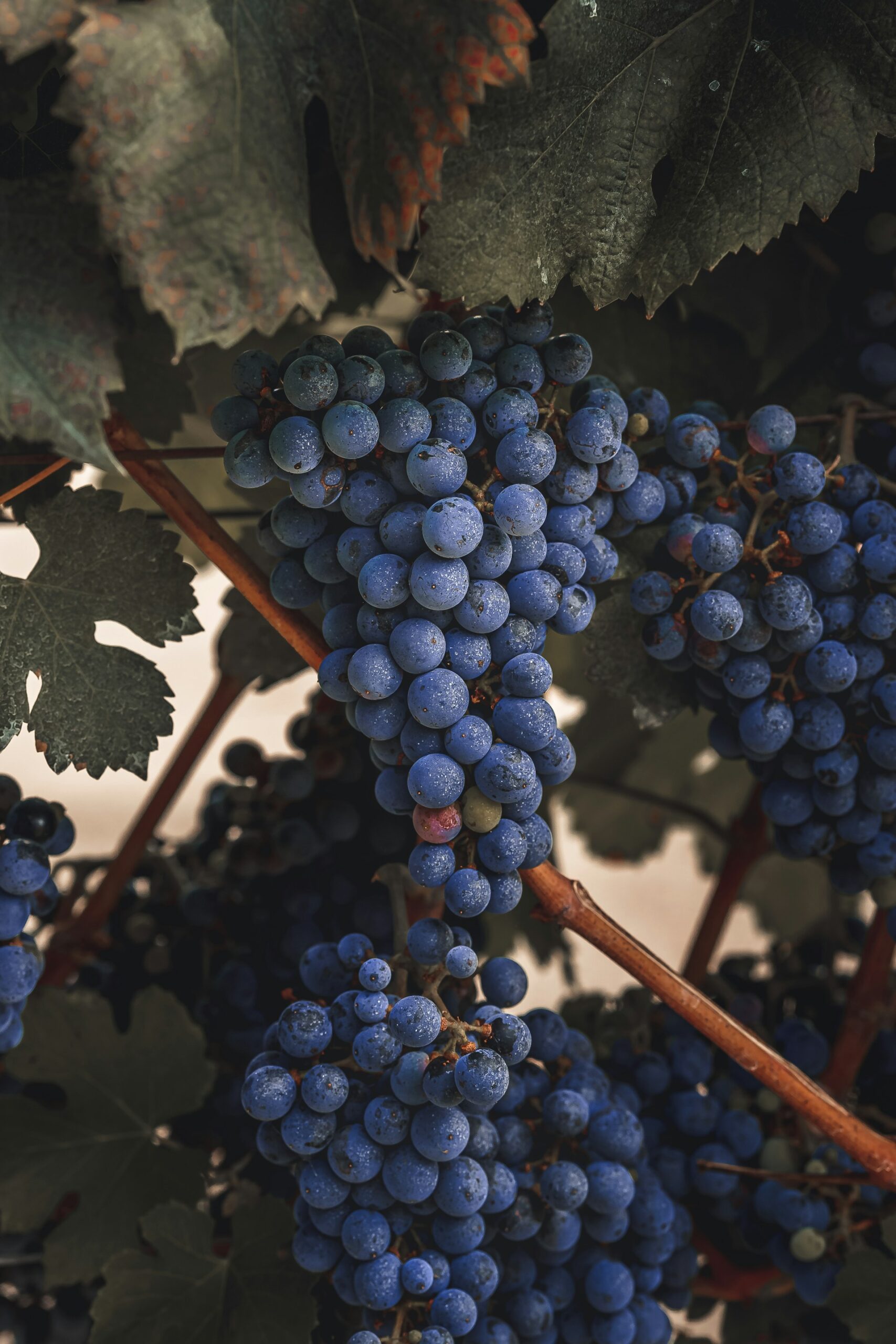
- Berries and grapesThe berries are small, thick-skinned and blue-black in colour. The ratio of skin to flesh is high, which ensures intense colour and tannin structure.
- Time of ripeningCabernet Sauvignon is one of the late-ripening varieties. Fully ripe grapes require a long growing season and sufficient warmth.
- ResilienceThe variety has a robust skin and a compact structure, which makes it relatively resistant to rot and many diseases.
- YieldIn quality viticulture, winegrowers deliberately reduce the yield so that the grapes develop more concentration, complexity and ripening potential.
For connoisseurs, this means: A high-quality Cabernet Sauvignon needs time - in the vineyard, in the cellar and in the bottle. At the same time, it is one of the grape varieties that clearly conveys its character of origin. Bordeaux tastes different from Napa Valley, Bolgheri different from Valais, yet the Cabernet type always remains clearly recognisable.
Cabernet Sauvignon flavour - aroma profile and style
The Cabernet Sauvignon flavour is one of the most distinctive profiles in the red wine sector. Depending on the climate, ageing and degree of maturity, the flavours range across a typical spectrum:
- Primary flavours (fruit)Blackcurrant (cassis), blackberry, black cherry, plum.
- Green and herbal notesGreen peppers, tomato panicles, mint, eucalyptus - intensified when the grapes are not fully ripe.
- Secondary flavours (ageing)Cedar wood, smoke, vanilla, tobacco, coffee, cocoa, leather, depending on the duration and origin of the oak barrels.
- Tertiary flavours (maturity)Undergrowth, truffle, cigar box, dried fruit and balsamic notes when the wine comes out of the bottle matured.
Structurally, three factors characterise the Cabernet Sauvignon grape variety:
- ColourDark ruby red to purple, with high colour density.
- TanninNoticeable, often strong tannins that provide a grippy mouthfeel and carry the ageing potential.
- AcidA fresh, supporting acidity that gives the wine backbone and tension.
Young, high-quality Cabernet Sauvignon red wines often appear tight, concentrated and taut. With maturity, the tannin structure changes from angular to silky, and the flavours shift from dominant fruit to complex, spicy nuances. Cabernet Sauvignon is an ideal grape variety for those who like to drink storable red wine.
Is Cabernet Sauvignon white or red wine?
One of the most frequent search queries is: „Is Cabernet Sauvignon white or red wine?“ The answer is clear: the Cabernet Sauvignon grape variety is a red wine grape. As a rule, it produces strong, deep, dark red wines.
Nevertheless, the term „Cabernet Sauvignon white wine“ occasionally crops up. There are usually two phenomena behind this:
- Winemakers make white or very light-coloured wines from red grapes by leaving the skins in contact with the must for an extremely short time. These wines then appear as „Blanc de Noirs“ or as experimental specialities.
- In everyday life, guests confuse Cabernet Sauvignon with Sauvignon Blanc because both names contain the word „Sauvignon“. However, Sauvignon Blanc is a white grape variety in its own right, which generally produces aromatic white wines.
The following is important when shopping at Feiniwy: If you want to buy a Cabernet Sauvignon red wine dry you are looking for a classic, dark red wine. For fresh, aromatic white wines, for example, discover our grape variety portraits for Sauvignon Blanc or Chardonnay.
Cabernet Sauvignon grape compared to other grape varieties
Those who appreciate Cabernet Sauvignon are usually also interested in comparing it with other grape varieties. The question arises particularly frequently: „What is the difference between Merlot and Cabernet Sauvignon?“
Cabernet Sauvignon vs. Merlot
Merlot and Cabernet Sauvignon both come from Bordeaux, where they are traditionally combined into cuvées. Nevertheless, they differ in several respects:
- Tannin structureCabernet Sauvignon has stronger, more angular tannins, Merlot is rounder and softer.
- Flavour imageCabernet Sauvignon shows cassis, blackberry, paprika and spicy wood notes. Merlot is reminiscent of plum and cherry, often with chocolatey notes.
- Drinking maturityPure Cabernet Sauvignon red wines often benefit from bottle ageing. Merlot is more accessible when young.
In a high-quality Bordeaux blend, Merlot complements the structure of the Cabernet Sauvignon grape variety with fullness and juiciness. Those who prefer elegant, mineral red wines often go for Cabernets from Bordeaux or the cooler „Old World“. Friends of round, fruit-emphasised wines will find an ideal companion in Merlot.
For an in-depth look at other important grape varieties, we recommend our articles on Pinot Noir and Tempranillo, in which you can understand the stylistic differences to Cabernet Sauvignon in detail.
Important growing regions for Cabernet Sauvignon
The Cabernet Sauvignon Origin remains Bordeaux, but the grape variety now feels at home in numerous regions. It is worth taking a look at the most important styles when making a selection by the glass or in the shopping basket.
Bordeaux - the classic home
In the Médoc and in parts of Graves, Cabernet Sauvignon forms the backbone of many famous wines:
- Pauillac, Saint-Julien, Saint-Estèphe, MargauxComplex cuvées with a high Cabernet content, finely polished tannins and great ageing potential are produced here.
- Cabernet is often combined with Merlot, Cabernet Franc and smaller proportions of Petit Verdot.
These wines are considered the reference style of the Cabernet Sauvignon grape variety: structured, elegant and long-lasting. In our range at Feiniwy, for example, you will find Bordeaux wines based on Cabernet in the following categories Red wines from France.
Italy - Tuscany and more
In Tuscany, especially in Bolgheri and the Maremma, a modern interpretation has established itself:
- Cabernet Sauvignon is combined with Merlot, Cabernet Franc or Sangiovese.
- The wines show dark berry fruit, Mediterranean herbs and an often clearly noticeable but finely integrated wood maturation.
In the Feiniwy range you will find in the category Italian wine numerous examples in which the Cabernet Sauvignon grape plays a central role - for example in Bolgheri or Toscana IGT wines.
New World - California, Chile, Australia
In the so-called „New World“ regions, a fruit-orientated, accessible style usually dominates:
- California (Napa Valley, Sonoma)Ripe blackcurrant, dark cherry, often distinct vanilla and toast flavours due to barrique maturation.
- ChileJuicy, fresh Cabernets with notes of paprika and mint, usually with an impressive price-pleasure ratio.
- AustraliaDifferent styles from cool regions with mint and eucalyptus notes to warm regions with opulent fruit.
The addition „Cabernet Sauvignon red wine dry“ almost always stands for a wine with clear fruit, strong structure and a distinctive wood signature.
Cabernet Sauvignon in Switzerland and the DACH region
A growing number of Cabernets full of character are also being produced in Switzerland, Austria and Germany:
- Warm locations in Switzerland, for example in Ticino or Valais, provide expressive but often finer interpretations.
- In Austria, Cabernet Sauvignon is often found in cuvées in which indigenous varieties such as Blaufränkisch form the basis.
- In Germany, the variety is benefiting from climate change, with interesting Cabernet-based red wines being produced in the Palatinate and Baden in particular.
If you are interested in these regions of origin, it is worth taking a look at our categories Swiss wine and French wine, where you can discover wines characterised by Cabernet.
Ageing in the cellar - barrique, cuvée and variety of styles
The Cabernet Sauvignon grape variety naturally has a lot of tannin, colour and structure. This makes it ideal for classic, more oxidative ageing in wooden barrels, especially in French or American oak barriques.
Two central development paths characterise the style:
Pure Cabernet Sauvignon
- Emphasises the varietal character with cassis, dark fruit and a structured tannin vein.
- Additional flavours of vanilla, spices, cedar wood and tobacco develop in the barrique.
Cuvée with other grape varieties
- In Bordeaux, Merlot complements Cabernet with fullness and a softer tannin structure.
- In Italy, varieties such as Sangiovese or Syrah come alongside it.
- In Switzerland and Austria, combinations with Pinot Noir, Blaufränkisch or local varieties can be found.
Winegrowers use this to specifically control drinking maturity, fruit accentuation and structure. For you as a connoisseur, the following applies: A single-varietal Cabernet Sauvignon dry red wine from a high-quality origin often has a full-bodied flavour and benefits from some bottle ageing, while cuvées taste accessible earlier.
Cabernet Sauvignon red wine dry - style, quality and price
Many wine lovers are explicitly looking for „Cabernet Sauvignon red wine dry“ and at the same time are interested in the Cabernet Sauvignon red wine price. The entire spectrum of the grape variety is evident in this segment:
- Entry-level winesFruit emphasised, medium body, moderate tannin structure, ideal for uncomplicated enjoyment.
- Upscale segmentMore concentration, more complex flavours, noticeable wood maturation, finer tannins.
- Top winesGreat depth, multi-layered flavour, high storage potential, correspondingly higher price.
The price range extends from inexpensive everyday wines to iconic growths from Bordeaux or California. Quality-conscious connoisseurs pay less attention to the lowest possible price than to the quality of the wine:
- Origin and producer,
- Vintage,
- Information on ageing (stainless steel tank, large wood, barrique).
At the Felber wine office, we focus on Honestly produced Cabernet Sauvignon wines with a strong character, that precisely reflect their terroir and are convincing in their respective price range. If you prefer red wine, you will find in the category Buy red wine a curated selection in which Cabernet plays an important role.
Foodpairing - Which dishes go well with Cabernet Sauvignon?
The powerful structure and aromatic depth of the Cabernet Sauvignon grape variety predestine it for full-bodied dishes. Those who consciously combine wine and food use the tannins and acidity of the wine to harmonise the fat and proteins in the food.
A particularly good fit:
- Red meatBeef fillet, entrecôte, lamb chops, game dishes.
- Grilled foodGrilled steak, burgers with high-quality beef, grilled vegetables with Mediterranean herbs.
- Braised dishesOssobuco, beef stew, lamb shank, braised beef with dark sauce.
- CheeseMatured hard cheeses, flavoursome soft cheeses with a strong rind.
The interplay of intensity is important: an elegant Bordeaux requires finer cuisine than a powerful „New World“ Cabernet. If you want to delve deeper into the topic, you can find more information in the article Wine and cheese - the best pairings for gourmets additional inspiration for delicious combinations.
Serving temperature, decanting and glass selection
So that the Cabernet Sauvignon grape variety shows its potential, serving temperature, air contact and glass play a central role.
- Serving temperature: High-quality Cabernet Sauvignon red wines are ideal with 15 to 18 °C. Served too warm they appear alcoholic and heavy, too cool the tannins and flavours close up.
- Decanting:
- Young, powerful Cabernets benefit from 1-2 hours in the carafe to smooth out tannins and open up flavours.
- Decant mature wines carefully just before drinking, primarily to separate the sediment from the liquid.
- Choice of glassLarge, bulbous red wine glasses with a tapered opening give the aromatic fullness and tannins room to unfold.
If you are interested in the basics of wine tasting, the guide Wine knowledge and in the article „How to taste wine properly: A Beginner's Guide“ for the appropriate entry-level tools to confidently judge Cabernets and other grape varieties.
Cabernet Sauvignon and storage - recognising and exploiting potential
The Cabernet Sauvignon grape variety is considered the epitome of a storable red wine. The combination of high tannin concentration, stable acidity and intense fruit creates ideal conditions for long development in the bottle.
What you need to know about storage:
- Shelf life: You drink simpler qualities in the first 3-5 years, superior Cabernets reach their peak between 5 and 15 years, top wines mature for 20 years and longer.
- Storage conditionsConstantly cool temperatures (10-14 °C), darkness, horizontal bottle position and moderate humidity are crucial.
- Development:
- Young wines: Dominant fruit, firm tannins, powerful structure.
- With maturity: Finer tannins, more complex spice, increasingly tertiary flavours of leather, cigar box and undergrowth.
If you want to set up a small wine cellar at home, you can find practical tips in the article „10 tips for storing wine properly at home“ on Feiniwy - for Cabernet Sauvignon as well as for white wines and other red wine styles.
Cabernet Sauvignon in the wine trade - what to look out for when buying
When buying Cabernet Sauvignon wine, you will come across a wealth of offers, from cheap supermarket products to rare cult wines. For quality-conscious connoisseurs, it is worth taking a clear look at a few decision-making factors:
- OriginBordeaux, Tuscany, Napa Valley, Chile or Swiss vineyards - each region characterises its own style.
- ProducerRenowned wineries usually stand for consistent quality and a clearly defined style.
- VintageWarmer or cooler growing seasons influence the degree of ripeness of the grapes and thus the character of the wine.
- ExpansionPure Cabernets from barriques often appear more concentrated and complex than simple cuvées from steel tanks.
Trust in the selection also plays a role when buying online. At the Felber wine office at Feiniwy, we emphasise a carefully curated selection that is geared towards connoisseurs and gourmets, not just mass products. In the category Spanish red wine or in the areas for White wines You can also discover additional alternatives if you want to combine different styles for different courses of a menu.
Table: Important style profiles of the Cabernet Sauvignon grape variety at a glance
| Region / Style | Typical flavour | Structure | Recommended drinking age |
|---|---|---|---|
| Bordeaux (Médoc) | Cassis, cedar wood, tobacco, graphite | Strong tannins, fresh acidity | 5-20 years, sometimes longer |
| Tuscany (Bolgheri, Maremma) | Black berries, Mediterranean herbs, fine roasted flavours | Full body, ripe tannins | 4-15 years |
| California (Napa Valley) | Ripe berries, plum, vanilla, chocolate | Lush, often softer tannins | 3-15 years |
| Chile | Dark fruit, paprika, mint | Medium body, fresh structure | 3-10 years |
| Switzerland / cool locations | Dark berries, fine spice, often mineral notes | Medium body, firm tannins | 4-12 years |
This overview will help you to quickly assess which region and which style suits your taste and your planned menu when browsing the Feiniwy range.
Cabernet Sauvignon in the context of other grape varieties - portfolio and menu planning
Who the Cabernet Sauvignon grape variety can structure their own wine portfolio in a targeted manner:
- For hearty meat dishesCabernet Sauvignon, Syrah/Shiraz, powerful Tempranillo wines.
- For a more elegant kitchenPinot Noir, finer Bordeaux blends with a higher proportion of Merlot.
- For aperitifs and fish dishesWhite wines such as Sauvignon Blanc, Chardonnay or fresh Mediterranean white wines.
In our blog on feiniwy.ch/blog you will find additional articles, for example on the question „Red wine or white wine - which goes with which menu?“. You can combine Cabernets and other grape varieties to create a harmonious culinary evening.
Frequently asked questions about the Cabernet Sauvignon grape variety
Is Cabernet Sauvignon a hybrid?
Yes, the Cabernet Sauvignon grape variety originated as natural crossing of the red grape variety Cabernet Franc and the white grape variety Sauvignon Blanc. This genetic combination explains the intense fruit character, the striking acidity structure and the distinct herbal and paprika notes of many Cabernet Sauvignon red wines. So if you like Cabernet, you will always discover elements of both original varieties in your glass.
Is Cabernet Sauvignon white or red wine?
Cabernet Sauvignon is a red grape variety and classically results in Red wine. However, when people talk about „Cabernet Sauvignon white wine“, they are usually referring to experimental Blanc de Noirs interpretations made from red grapes or confusion with Sauvignon Blanc. In the Feiniwy range you will find Cabernet primarily as Cabernet Sauvignon red wine dry in different styles and origins.
What is the difference between Merlot and Cabernet Sauvignon?
Merlot and Cabernet Sauvignon both come from Bordeaux, but are very different:
- Cabernet Sauvignon: Stronger tannins, more intense cassis and blackberry flavours, grippy structure and higher ageing potential.
- MerlotSofter tannins, notes of plum and cherry, rounder and accessible earlier.
In Bordeaux blends, the two grape varieties complement each other: Merlot rounds off the structure of the Cabernet Sauvignon grape variety, while Cabernet provides backbone and longevity.
Which grape variety is Cabernet Sauvignon?
Cabernet Sauvignon is a international red wine grape variety with origins in Bordeaux. Today, it is one of the world's most important grapes and is present in many top wines, whether as a single variety or as the main component of a cuvée. This grape variety is characterised by dark berry aromas, strong tannins, fresh acidity and great ageing potential. Among the so-called „noble grape varieties“, it is considered the archetypal grape for structured, long-lasting red wine.
What does a typical dry Cabernet Sauvignon red wine taste like?
A dry Cabernet Sauvignon red wine usually shows Aromas of blackcurrant, blackberry and black cherry, flavours, complemented by notes of paprika, herbs, tobacco and cedar wood. On the palate, it presents itself with strong tannins, fresh acidity and often a full body. Wines matured in barriques develop additional vanilla, coffee or chocolate flavours. Depending on the origin and ageing process, this results in a spectrum ranging from taut, elegant Bordeaux to opulent, fruit-accentuated „New World“ Cabernets.
What dishes does Cabernet Sauvignon go best with?
The Cabernet Sauvignon grape variety harmonises particularly well with red meat such as beef or lamb, with Game dishes, savoury stews and strong hard cheeses. The tannins bind protein and fat, the fresh acidity creates tension and the dark fruit complements roasted flavours and intense sauces. Those planning a multi-course meal often combine Cabernet Sauvignon red wine dry with the main course and choose a white wine or a lighter red wine for starters and fish.
How long can Cabernet Sauvignon be stored?
The ageing potential depends on quality, origin and ageing. Simple Cabernets are best drunk in the first 3-5 years, higher qualities reach their ideal drinking maturity between 5 and 15 years, top wines with a high proportion of the Cabernet Sauvignon grape variety will accompany you for several decades. Cool, dark storage conditions and a constant temperature are crucial. With increasing maturity, Cabernets develop complex tertiary flavours and an increasingly fine tannin structure.
///Comment: Tips for external links for E-E-A-T (Note: depending on the language - here de-DE)
- https://www.deutscheweine.de - Information page of the German Wine Institute, including a profile of the Cabernet Sauvignon grape variety. Suitable as a link in the section „Botany and characteristics of the Cabernet Sauvignon grape“.
- https://www.hs-geisenheim.de - Hochschule Geisenheim University with specialist articles on Cabernet Sauvignon, ageing and sensory analysis. Useful after the section „Ageing in the cellar - barrique, cuvée and style diversity“.
- https://www.oesterreichwein.at - Official information page on Austrian wine, including a portrait of the Cabernet Sauvignon grape variety. Suitable as a supplement in the section on „Cabernet Sauvignon in Switzerland and the DACH region“.
- https://www.vinos.ch/weinwissen - Swiss wine portal with background knowledge on grape varieties and wine styles, to deepen your knowledge after the introduction to the Cabernet Sauvignon grape variety.
- https://www.delinat.com/weinwissen - Well-founded wine knowledge on cultivation, grape varieties and ageing in the context of sustainability. A good addition after the section on the origin and worldwide distribution of the Cabernet Sauvignon grape variety.
Wines at fair and transparent prices
feiniwy.ch
- Novelties
- Alcohol-free products
- Red wines
- White wines
- Rosé wines
- Sparkling wines/champagne
- Olive oil
Felber wine office
feiniwy.ch