

No products in the cart.
feiniwy.ch
Grape varieties - Petit Verdot
- Grapes, Wine knowledge
- All contributions
Are you interested in the Petit Verdot grape variety, would you like to understand its character and know when a single-varietal Petit Verdot is worth trying and when it shines as a component of a blend? In this comprehensive guide from Weinbüro Felber at feiniwy.ch You’ll gain a comprehensive, practical overview – from the wine’s origins and flavour profile to food pairings, storage and shopping tips.
What is Petit Verdot? A brief introduction to the grape variety
The Petit Verdot grape variety It belongs to the family of classic Bordeaux grapes. In its regions of origin, the Médoc and Graves, it is traditionally used as a structure-giving component in blends of Cabernet Sauvignon, Merlot, Cabernet Franc and other varieties.
The name „Petit Verdot“ literally means „little green one“. This name alludes to the grapes’ very late ripening: the berries remain green for a long time, require plenty of sun and warmth, and only develop their intense, dark blue colour late in the season. It is precisely this late ripening that explains why the grape variety is considered challenging in cooler areas, whereas in warmer regions it is regarded as a real asset.
Key characteristics of the Petit Verdot grape variety at a glance:
- A red wine grape variety (Vitis vinifera) from south-west France
- Part of the classic Bordeaux family of grape varieties
- Late-maturing, heat-loving, tolerant of heat and drought
- Very dark colour, high tannin content, pronounced acidity
- Used both in cuvées and as Single-varietal Petit Verdot
This combination of structure, colour and flavour is making the grape variety increasingly attractive to quality-conscious wineries in Europe and overseas – and an exciting area of discovery for discerning wine lovers.
Origins and History – from Bordeaux to the world
The Petit Verdot grape variety originates from south-western France, with a historical concentration in the Bordeaux region. Genetic studies classify it as one of the old Bordeaux varieties, with roots thought to lie in wild vines from the Pyrenees region.(delinat.com)
For many decades, Petit Verdot vines in the Médoc have played a quiet but defining role: small proportions – often 2–8 per cent – in high-quality cuvées are enough to noticeably enhance the depth of colour, tannins and spice.
With the mechanisation of viticulture, changing consumer expectations and a period of cooler years in the 20th century, the area under vine in Bordeaux declined. This late-ripening variety was considered high-risk when autumns were cool and damp. At the same time, winegrowers in warmer regions discovered the variety’s potential for producing full-bodied red wines.
Today, the Petit Verdot grape variety in many major wine-producing countries:
- France: Bordeaux (Médoc, Graves), and to some extent also in the Languedoc
- Spain: including Castile-La Mancha and other warm regions ([weinfreunde.de](https://www.weinfreunde.de/magazin/weinwissen/petit-verdot/?utm_source=openai))
- Italy: mainly in central and southern Italy, often used in modern blends
- New World: Australia, California, Chile, Argentina, South Africa and other countries ([weinlaube.de](https://www.weinlaube.de/weinwissen/rebsorten/rote/petit-verdot/?utm_source=openai))
Climate change is fuelling this trend: in traditional wine-growing regions such as Bordeaux, producers are now benefiting from the fact that, with warmer, drier summers, Petit Verdot ripens more reliably and lends the cuvées additional structure.(meininger.de)
Petit Verdot grape variety: Ampelographic and viticultural characteristics
For wineries that use the Petit Verdot grape variety When working in the vineyard, a number of specific characteristics play a key role.
Characteristics of the vineyard:
- Shoot growth: vigorous, upright, with relatively compact bunches
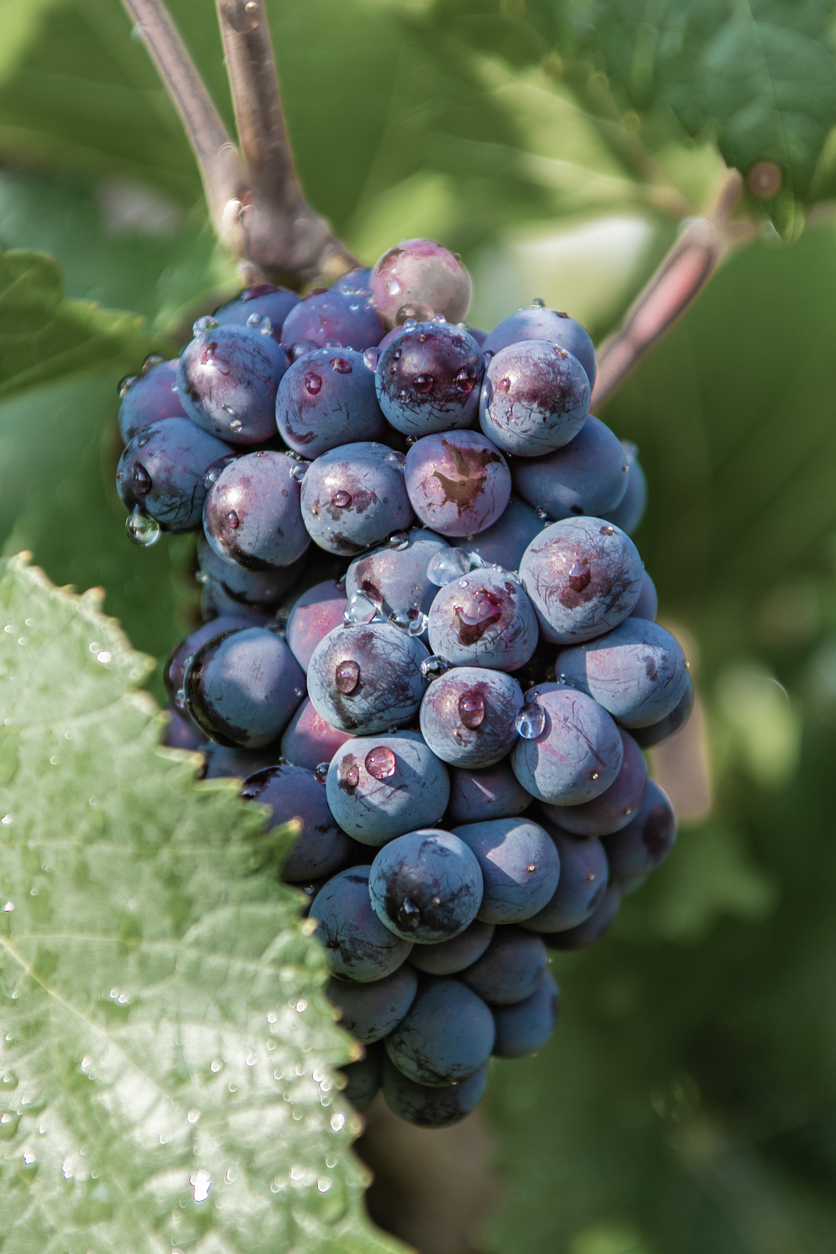
- Grapes: small, with tightly packed berries and a thick skin
- Maturation period: late, in some cases with a distinct Cabernet Sauvignon character
- Yield: Rather low to moderate, with a tendency to drop flowers under unfavourable flowering conditions
- Site requirements: warm locations, well-drained soil, preferably with gravel, sand or crushed stone
The thick skin of the grapes results in a high content of pigments and tannins. However, on cool, damp soils, green, herbaceous notes and harsh tannins can quickly develop. This is why many estates specifically plant Petit Verdot on warm, well-aerated plots, often on barren, stony soils that retain heat.
Advantages from the winegrower’s perspective:
- A very intense colour, even in small quantities
- Distinctive tannin structure, ideal for stabilising cuvées
- Well suited to ageing in barriques, as the wood rounds off the tannins
- Consistent quality in warm, dry vintages
In years when the fruit is perfectly ripe, it is possible to make Petit Verdot grape variety produce an impressive, long-lasting red wine that is ideal for collectors and connoisseurs of full-bodied wines.
Petit Verdot: Flavour – Aromas, Structure and Ageing Potential
What does Petit Verdot taste like? This grape variety has a distinct stylistic signature which varies depending on its origin and vinification, but which always remains clearly recognisable.
Typical aromas of the Petit Verdot grape variety:
- Dark fruits: blackberry, black cherry, blackcurrant, plum
- Floral notes: violet, iris, dried flowers
- Spicy notes: pepper, liquorice, graphite, tobacco, black tea
- As it matures: leather, cedarwood, cocoa, often with balsamic notes
The structure shapes the character:
- Colour: very deep, often almost opaque, ranging from ruby to violet-black
- Tannin: robust, fine-grained to pronounced, with noticeable grip
- Acid: medium to high, adds a touch of freshness
- Body: medium to full-bodied, depending on the region and yield
A young, single-varietal Petit Verdot often displays powerful, concentrated fruit and pronounced tannins. As it matures in the bottle, this structure becomes increasingly integrated, the tannins appear more refined, and complex tertiary aromas come to the fore. High-quality examples develop impressive depth over 10 to 15 years – and, in exceptional cases, even beyond that.
For Bordeaux blends, the winemaker utilises these characteristics in concentrated form: even small proportions of the Petit Verdot grape variety They reinforce the wine’s structure, impart a darker colour and prolong the aromatic finish.
Petit Verdot compared: how it differs from Verdot, Cabernet Franc and other varieties
Many wine lovers ask themselves questions such as „What is the difference between Verdot and Petit Verdot?“ or want to compare the flavour of Petit Verdot with that of other grape varieties.
What is the difference between Verdot and Petit Verdot?
Historically, terms such as „Verdot“ and „Petit Verdot“ have sometimes been used interchangeably. In current practice, „Petit Verdot“ refers to the recognised grape variety. „Verdot“ serves more as a collective or alternative name. Ampelographically, there used to be various varieties that were sometimes grouped together under „Verdot“; in the modern wine industry, however, Petit Verdot the central role.(vinovossum.de)
Petit Verdot and Cabernet Franc
Both Cabernet Franc Both Cabernet Sauvignon and Petit Verdot belong to the Bordeaux family, but differ significantly in style:
- Cabernet Franc: often a lighter colour, finer tannins, red fruit, herbs, graphite and notes of violet blossoms.
- Petit Verdot: darker colour, more pronounced tannins, dark fruit, robust spice, floral notes such as violets, often more body on the palate.
In blends, the two grape varieties complement each other well: Cabernet Franc lends finesse and aromatic freshness, which Petit Verdot grape variety adds depth and bite.
Petit Verdot and Monastrell
Monastrell (Mourvèdre) thrives best in hot, dry regions such as southern Spain or southern France. Both grape varieties thrive in warm conditions, but differ in their aromatic profiles:
- Monastrell: often sweeter fruit, Mediterranean herbs, notes of game and meat, and sometimes animal-like nuances.
- Petit Verdot: Cooler, darker fruit, more pronounced floral and graphite-like notes, a tighter acidity profile.
Anyone who enjoys full-bodied red wines from Spanish grape varieties As Monastrell suggests, high-quality Petit Verdot offers an interesting alternative with an even more pronounced tannin structure.
Petit Verdot as a single variety or in blends? Stylistic variations across different regions
The Petit Verdot grape variety varies remarkably depending on the country of origin and the ageing process.
France: A traditional role in Bordeaux
In the Médoc and Graves, wineries use Petit Verdot in small proportions in blends with Cabernet Sauvignon and Merlot. The grape variety rarely appears on the label, but it shapes the structure of the wines: a darker colour, additional tannins and more spice. Single-varietal wines remain the exception in Bordeaux, but are slowly gaining attention.
Spain: from cuvée partner to soloist
In Spain, the Petit Verdot grape variety Since the 1990s, it has become a defining characteristic of modern wines. Particularly in Castile-La Mancha and other warm regions, full-bodied red wines are produced – often barrique-aged – which are made exclusively from Petit Verdot or contain a high proportion of this variety.(weinfreunde.de)
Petit Verdot, Italy
Petit Verdot in Italy It is usually found as a component of sophisticated blends, particularly in Tuscany and in coastal regions with a Mediterranean climate. In the context of the so-called „Supertuscans“, Petit Verdot often complements Cabernet Sauvignon, Merlot and Syrah:
- Greater colour depth and tannin structure
- Spicy notes and floral overtones
- Good ageing potential when aged in barriques
In warm vintages, some wineries also bottle Single-varietal Petit Verdot … usually in very limited quantities. For lovers of full-bodied red wines, this style is one of the most exciting discoveries.
New World: Australia, Chile, Argentina, California
In Australia, Chile, Argentina and California, the Petit Verdot grape variety their character is often most evident here. The warm, sunny climate allows the grapes to ripen without any problems. The result:
- An intense, full-bodied colour
- Ripe, almost sweet-tasting dark fruit
- Robust but mature tannins
- Distinct influence of barrique (vanilla, toast, chocolate)
Many single-varietal Petit Verdot wines come from Argentina and Australia in particular, and they impress with their modern style and expressive fruitiness.
Table: Typical styles of the Petit Verdot grape variety by region
| Region | Main style | Typical flavours | Structure |
|---|---|---|---|
| Bordeaux (Médoc, Graves) | Cuvée partner, small share | Blackcurrant, violet, graphite | High tannins, fresh acidity, great ageing potential |
| Spain (e.g. La Mancha) | Single-varietal wines and blends | blackberry, plum, warm spice | Full-bodied, with ripe tannins and moderately fresh acidity |
| Italy (Tuscany, etc.) | Blends featuring Bordeaux grape varieties | Dark fruit, herbs, cedar wood | Well-structured, elegant, well-suited to barrique ageing |
| Australia, Chile, Argentina | Single-varietal wines, full-bodied blends | Concentrated dark fruit, chocolate, spices | Full-bodied, high in tannins, often with a long finish |
Petit Verdot: Pronunciation, translation and synonyms
Many customers ask at Weinbüro Felber about the correct Petit Verdot pronunciation or search by name Petit Verdot (German).
Pronunciation:
„In French, “Petit Verdot’ roughly translates as „pö-TEE ver-DOH“ Pronounced with the stress on the second syllable of „Petit“ and on the final syllable of „Verdot“.
Literal translation:
„Petit“ means „small“, whilst „Verdot“ is derived from „vert“ (green), meaning „little green one“. This name refers to the long period during which the grapes remain green on the vine.
Synonyms:
Alternative names appear in historical documents and in certain regions, such as „Verdot“, „Petit Verdau“ or „Verdot Rouge“. In the modern world of wine, however, the name Petit Verdot has become established as the standard.(vinovossum.de)
Food pairing: What food goes well with Petit Verdot?
The pronounced tannin structure and the dark aromas of the Petit Verdot grape variety call for dishes with real character. Paired with the right dish, a Petit Verdot reveals its full elegance and precision.
Ideal dishes to pair with a single-varietal Petit Verdot:
- Braised beef dishes (ossobuco, beef ragout, braised beef cheeks)
- Roast leg of lamb, lamb chops with a herb crust
- Game dishes (roe deer, red deer, wild boar), particularly served with dark sauces
- Grilled or pan-fried beef (entrecôte, ribeye, T-bone)
- Hard and semi-hard cheeses with a strong flavour (mature Comté, Gruyère, Manchego)
When it comes to cuvées containing Petit Verdot, the rule is: the higher the proportion, the heartier the dish can be. A Bordeaux containing just 3–5 per cent Petit Verdot pairs very well with roast beef or braised poultry, whilst a single-varietal Petit Verdot is best suited to the most intense meat dishes.
If you’re looking for inspiration for other combinations, it’s worth taking a look at our post on Wine and cheese pairings. It sets out general principles that are also useful when pairing Petit Verdot with different types of cheese.
Petit Verdot in a restaurant: what to look out for
The search term „Petit Verdot Restaurant“ shows that many wine lovers experience this wine primarily in a dining context. Petit Verdot is often found in upmarket restaurants:
- featured on the wine list as part of a premium Bordeaux blend
- as an exciting glass of wine from Spain, Argentina or Australia
- as a food pairing partner for signature dishes featuring beef or lamb
Tips for choosing what to eat in a restaurant:
- If the cuvée is not described in detail, ask about the blend of grape varieties.
- Ask for a glass to be poured and check whether the tannins and acidity complement the meal you’re planning to serve.
- For hearty game dishes, it’s worth choosing wines with a higher proportion of Petit Verdot.
Anyone who comes to appreciate Petit Verdot in restaurants can explore it further at home with bottles from specialist retailers. To this end, we offer Feiniwy in the red wine range a wide range of suitable alternatives – from classic Bordeaux blends to charismatic red wines from Spain and Italy, in which the grape variety plays a significant role.
Buying Petit Verdot – what quality-conscious wine lovers look out for
The search term „buy Petit Verdot“ indicates a clear interest in high-quality wines. As this grape variety isn’t found on every supermarket shelf, it’s worth making the trip to specialist retailers.
Key quality criteria to consider when buying:
- Origin: Bordeaux, Spain, Italy, Chile, Argentina, Australia and California are particularly relevant.
- Year: Choose warmer vintages, as the Petit Verdot grape variety requires reliable maturity.
- Wine type: Single-varietal Petit Verdot for intense, full-bodied wines; blends featuring Petit Verdot for elegant, well-balanced red wines.
- Winery: Estates with a clear quality profile, lower yields and meticulous vineyard management produce wines that are distinctly different.
At Weinbüro Felber, we place great importance on offering a carefully curated selection. Our philosophy: Clear provenance, authentic style, verifiable quality. In our online shop feiniwy.ch you will find:
- Exciting Bordeaux blends, often containing a proportion of Petit Verdot
- Characterful red wines from Spain and Italy made from Bordeaux grape varieties
- Carefully selected rarities that are ideal for ageing in the cellar
Anyone wishing to explore the classic Bordeaux partners in greater depth will also find our detailed profiles on Cabernet Sauvignon grape variety and to the Chardonnay grape variety. They show just how diverse the Bordeaux range is on our shelves.
Serving temperature, glass choice and decanting for Petit Verdot
The Petit Verdot grape variety They reach their full potential when the temperature, ventilation and shape of the glass are just right.
Serving temperature:
- 100% Petit Verdot: 16–18 °C
- Elegant cuvées containing Petit Verdot: 15–17 °C
If it is too cold, the tannins make the wine seem even more astringent and the fruit is muted. If it is too warm, the alcohol and bitter notes come to the fore.
Choice of glass:
Choose a large Bordeaux glass with a bulbous shape and a slightly tapered rim. The wide surface area allows the wine to come into contact with oxygen, whilst the narrower rim concentrates the intense aromas and directs them straight to the nose.
Decanting:
- Young, full-bodied, single-varietal wines: 1–3 hours in a decanter
- Bordeaux blends containing Petit Verdot: 30–90 minutes, depending on the structure
- Mature, older bottles: aerate gently, primarily to separate the sediment; do not leave open for too long
A well-aerated Petit Verdot is noticeably more harmonious: the tannins appear more refined, the fruit gains in clarity, and floral and spicy notes come to the fore more distinctly.
Ageing potential and maturation of the Petit Verdot grape variety
Due to its high tannin and acidity levels, the Petit Verdot grape variety In high-quality vintages, it has considerable ageing potential.
Guidelines for shelf life:
- A simple, fruit-forward Petit Verdot from warm regions: 3–7 years
- Ambitious single-varietal wines aged in barriques: 8–15 years
- Top-quality Bordeaux blends featuring Petit Verdot: 10–20 years and beyond
As the wine matures, complex secondary and tertiary aromas develop:
- From fresh blackberries to stewed plums, rum-soaked fruit and black cherries
- From floral violet notes to dried flowers and tobacco
- From crisp tannins to a velvety, fine-grained texture
If you’d like to store Petit Verdot for longer, it’s worth taking a look at our guide to Storage and serving guidelines for fine wines as well as in the article on general wine storage. The basic guidelines set out there regarding temperature, light, humidity and bottle ageing also apply to Petit Verdot.
Petit Verdot in the context of other grape varieties – a must-try for wine lovers
Who the Petit Verdot grape variety understands and interprets cuvée descriptions in a more nuanced way. When blended with other classic varieties, the result is a finely balanced mosaic:
- Cabernet Sauvignon: Bone structure, body, cassis – Petit Verdot enhances the colour and tannins, and sharpens the profile.
- Merlot: Softness, plum, velvety texture – Petit Verdot adds bite and a cool, spicy note.
- Cabernet Franc: Fresh red fruit, herbs – Petit Verdot adds depth and dark notes.
- Syrah/Shiraz: Pepper, black olives, dark fruit – Petit Verdot defines the tannin structure and intensifies the colour.
This interplay particularly appeals to wine lovers who are looking for structured yet not overpowering red wines. As a curating wine agency, we ensure that every bottle in our range clearly expresses its own style – whether it’s a finely balanced Pinot Noir, which you can find in our article on Pinot Noir grape variety to get to know it better, or to try a full-bodied Bordeaux containing Petit Verdot.
Petit Verdot in everyday wine drinking: Who is this grape variety best suited to?
The Petit Verdot grape variety is aimed primarily at a target audience that savours life consciously and has clear ideas about structure and style:
- Wine lovers who appreciate dark, concentrated red wines with character
- Gourmets who deliberately pair wine with hearty dishes
- Collectors looking for wines suitable for ageing with potential for development
- Explorers who want to venture beyond the familiar grape varieties
If you like Cabernet Sauvignon, Syrah or full-bodied Spanish reds, it’s well worth taking a closer look at Petit Verdot. Those who prefer more delicate, fragrant wines, on the other hand, are best off starting with elegant blends in which this grape variety makes up a smaller proportion.
About our blog section feiniwy Blog We regularly expand on this knowledge and introduce new wine styles, regions and pairings – from Tempranillo to Sauvignon Blanc. In this way, your personal wine library grows, glass by glass.
Frequently asked questions about the Petit Verdot grape variety
What is Petit Verdot?
Petit Verdot is a red grape variety from south-western France, which is traditionally used in Bordeaux blends. The Petit Verdot grape variety It ripens late, produces very dark, tannin-rich wines and is grown worldwide in warm regions, including Spain, Italy, Australia, Chile and Argentina. The name means „little green one“ and refers to the long period during which the grapes remain green on the vine.
What is a Petit Verdot wine?
A Petit Verdot wine is either a single-varietal red wine made from the Petit Verdot grape variety or a blend in which this variety is a component. Single-varietal wines display powerful dark fruit, high tannins, fresh acidity and great ageing potential. In blends, the Petit Verdot grape variety Above all, it adds more colour, body and spicy depth, often in combination with Cabernet Sauvignon, Merlot or Cabernet Franc.
What does Petit Verdot taste like?
Petit Verdot flavour is characterised by intense dark fruit (blackberry, black cherry, plum), floral notes such as violets, and a distinctive spiciness with hints of pepper, graphite, tobacco and liquorice. On the palate, the Petit Verdot grape variety A deep colour, robust tannins, medium to high acidity and a full-bodied character. As they age, these wines develop additional notes of leather, cedar and cocoa, and become more harmonious and complex.
What is the difference between Verdot and Petit Verdot?
In modern usage, „Petit Verdot“ refers to the recognised grape variety, whilst „Verdot“ appears in historical sources and in certain regions as a collective term or synonym. These days, the term that is of practical relevance is almost exclusively the Petit Verdot grape variety. If a label says „Petit Verdot“, it refers to the well-known late-ripening Bordeaux grape variety, which is dark in colour and has a robust tannin structure.
Where is Petit Verdot most commonly grown today?
Petit Verdot originally comes from Bordeaux, but today the largest areas of it are found in warm regions such as Spain, Australia, Chile, Argentina and California. In Europe, the Petit Verdot grape variety As well as in France, it plays an important role particularly in Spain and in selected regions of Italy. You’ll find it both in classic Bordeaux blends and as a modern, single-varietal red wine from the New World.
Is Petit Verdot better suited to ageing or to drinking straight away?
High-quality wines from the Petit Verdot grape variety have excellent ageing potential. The combination of high tannin content and lively acidity makes them ideal for ageing for 8–15 years or longer, particularly when aged in barriques and from high-quality vintages. However, fruit-forward wines from warmer regions that are ready to drink sooner can also be enjoyed young, particularly if they are carefully decanted.
Does Petit Verdot go well with vegetarian or vegan dishes?
Yes, provided the dishes have sufficient texture and roasted flavours. The Petit Verdot grape variety Pairs well with dishes such as grilled aubergines, lentil or bean stews, mushroom risotto with porcini mushrooms, or heartily spiced vegetable stews. The key is that the texture and flavours of the food complement the wine’s powerful tannic structure and dark, spicy character.
///Comment: Tips on external links for E-E-A-T (Note: translated and adapted for de-DE)
- https://www.oiv.int – Official website of the International Organisation of Vine and Wine; provides statistical data on grape varieties and areas under cultivation. Suitable as a reference in the section on the global distribution of the Petit Verdot grape variety.
- https://catalogue.oiv.int – OIV catalogue of grape varieties, containing technical information on grape varieties; suitable as a source of further reading following the section on ampelographic and viticultural characteristics.
- https://www.vivc.de – Vitis International Variety Catalogue published by Geisenheim University; provides detailed variety profiles and synonyms for Petit Verdot. Useful to consult after the section on synonyms and origin.
- https://www.hs-geisenheim.de/forschung/institute/weinbau – Specialist information from Geisenheim University on viticulture and climate change; recommended to support the statements on late-ripening varieties and the effects of climate.
- https://www.dlr-rheinpfalz.rlp.de/de/themen/rebsorten – An information page from a state-run viticulture institute in Germany on grape varieties; useful as a supplementary source regarding viticultural characteristics and cultivation recommendations.
Wines at fair and transparent prices
feiniwy.ch
- Sales
- Novelties
- Alcohol-free products
- Red wines
- White wines
- Rosé wines
- Sparkling wines/champagne
- Olive oil
Felber wine office
feiniwy.ch