

No products in the cart.
feiniwy.ch
Ageing of the wine
- Winemaking in the cellar
- All contributions
The Ageing of the wine determines whether a young wine remains edgy or transforms into a harmonious, complex pleasure product. At Weinbüro Felber, we pay particular attention to this stage of winemaking because it characterises the style that you will later experience in your glass.
What exactly does ageing mean for wine?
The ageing of the wine in the cellar is understood to mean all the steps between the end of alcoholic fermentation and bottling. During this phase, the young wine matures, clarifies, stabilises and gains structure, balance and its own personality.
Typical expansion measures are
- Drawing off the yeast
- Clarification and stabilisation, for example through Clarifying agents and their application
- Choice of container (stainless steel, large wooden barrel, Barrique ageing, concrete tank)
- Control of oxygen contact and temperature
- Storage time on fine lees or in barrels
For you as a connoisseur, this means that behind an elegant white wine or a dense barrique red wine lies a very consciously controlled process.
From young wine to character wine: the aims of ageing
After pressing the grapes and Alcoholic fermentation the wine has been created, but is still raw in sensory terms. From the cellar master's point of view, the ageing of the wine pursues several goals:
- Clarification and stability: Lees, excess yeast and unstable components are removed or bound so that the wine is clear in the glass and remains stable in storage.
- Harmony of acidity, alcohol and tannin: Structural elements combine, edges round off. In red wines, tannins polymerise and the impression of astringency diminishes.
- Aromatic development: Fermentation flavours develop into mature flavours. Contact with yeast, wood or oxygen expands the aromatic spectrum.
- Stylistics and origin: The ageing of the wine conveys the winemaker's signature and the terroir. A reductively matured Pinot Noir from Graubünden has a completely different effect than a Tempranillo from Rioja matured in new oak.
If you are interested in finding out more about the history of the cellar, it is worth taking a look at Pressing the grapes and biological acid degradation (BSA) in the feiniwy.ch blog.
Reduced ageing in stainless steel tanks
At the Restricted oxygen contact is referred to as reductive ageing. It usually takes place in stainless steel tanks. Stainless steel is neutral in flavour and gas-tight, protecting the wine from oxidation.
Typical effects:
- Emphasis on primary flavours such as citrus, stone fruit or exotic fruit
- fresh acid structure, clear varietal typicity
- No wood flavours, no vanilla or toast tones
Many modern White wines in the Feiniwy range mature mainly in steel tanks to preserve the freshness and fruit from the vineyard. Fruity rosé wines also benefit from this style.
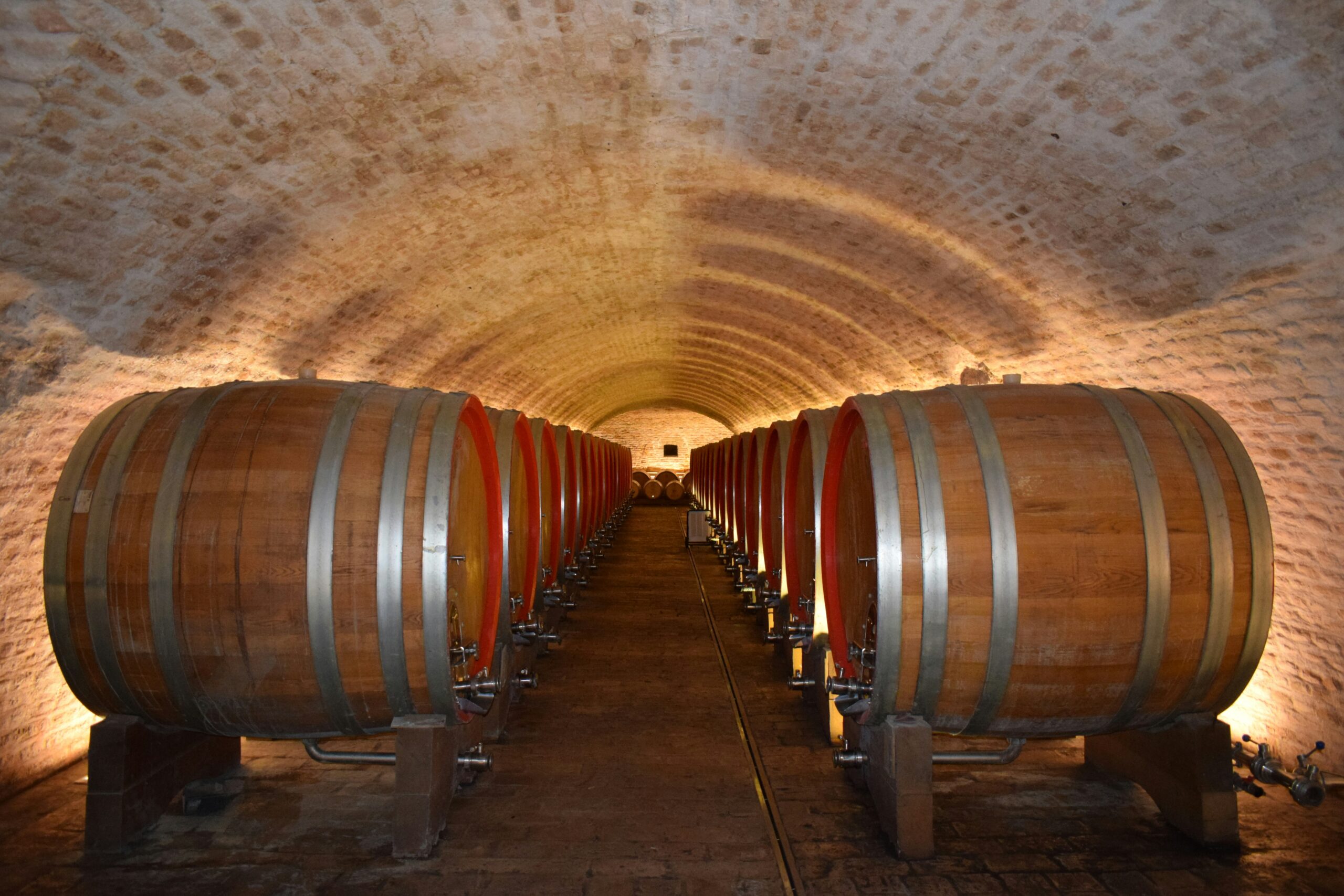
Matured in oak barrels and barriques
As soon as the wine is matured in wooden barrels, oxygen plays a differentiated role. Small amounts of air reach the wine through the pores of the oak. This controlled micro-oxidation ensures:
- Softer tannins and finer texture in red wine
- more volume and smoothness with white wine
- Development of secondary flavours such as vanilla, smoke, coffee or spice
At the Barrique ageing mostly use 225-litre barrels made from French or American oak. Barrel size, degree of toasting, wood origin and the use of first versus second fill characterise the style.
In comparison, a traditional large oak cask (e.g. 1,000 or 2,000 litres) lends its character:
- Less pronounced wood flavour
- but a gentle maturation with emphasised origin
- plenty of potential for long-lasting red wines and powerful white wines
If you would like to discover such wines specifically, browse through our categories Red wine and Spanish wines from Rioja & Ribera del Duero, where ageing in oak barrels plays a central role.
Fine yeast, BSA and other levelling screws in ageing
The ageing of wine involves more than the choice of steel or wooden barrel. For white wine and sparkling wine in particular, quality-orientated wineries use ageing on the fine lees:
- The fine yeast binds oxygen and protects the flavour.
- Regular stirring (bâtonnage) gives the wine more body and creaminess.
- Lees ageing intensifies the texture and prolongs the finish.
With red wines and powerful white wines, the malolactic fermentation plays an important role in ageing. It converts hard malic acid into milder lactic acid and has a flavour-enhancing effect:
- creamy mouthfeel
- less green, hard acidity
- additional notes of butter, nut or brioche depending on the style
The Clarification of the wine is achieved through sedimentation, filtration or clarifying and fining agents. The aim is always to remove flavour-disturbing components without distorting the character and origin.
Comparison of the most important expansion types at a glance
| Expansion type | Typical wine styles | Sensory effect |
|---|---|---|
| Reduced ageing in stainless steel tanks | Fresh white wines, fruity rosé wines, light red wines | Emphasised fruit, clear acidity, no wood aromas, high precision |
| Matured in large oak barrels | Structured white wines, classic red wines | Gentle micro-oxidation, rounder tannins, subtle woody notes |
| Barrique ageing wine | Premium red wines, powerful Chardonnay and Burgundy types | More intense wood flavours, complex maturity, greater storage potential |
Maturity period, quality levels and terms such as Crianza or Reserva
The length of time the wine is aged influences its texture, complexity and price. In regions such as Rioja, legal requirements define terms such as „Crianza“ or „Reserva“:
- Crianza: prescribed minimum times in the barrel and in the bottle
- Reserva: longer ageing, often higher quality batches
- Gran Reserva: very long ageing period, usually only in top vintages
Such information tells you as a consumer how pronounced barrel ageing, tannin maturity and secondary flavours are. If you are interested in the differences between grape varieties such as Tempranillo, Sangiovese or Cabernet, it is worth taking a look at our grape variety portraits, for example Tempranillo or Cabernet Sauvignon.
How the development of the wine supports your purchase
For quality-conscious wine lovers in Switzerland, the question always arises when making a purchase: Which style suits your occasion, your menu, your personal preference? If you read the labels and descriptions of the wine's ageing process, you will find some practical guidelines:
- „Stainless steel, reductive ageing“: ideal for aperitifs, light starters, when freshness and primary fruit take centre stage.
- „Partly matured in barriques“: good balance of fruit, structure and subtle woody spice, suitable with poultry, veal, mushroom dishes.
- „Long barrel ageing“: concentrated red wines with ripe tannins, perfect with beef or lamb dishes and mature cheese.
At the Felber wine office, we curate the feiniwy.ch range according to precisely these criteria. In the product descriptions you will find information on the ageing process, which will help you to select the right wine even more specifically.
FAQ on the ageing of the wine
What does ageing mean for wine?
The ageing of the wine includes all stages between the end of alcoholic fermentation and bottling. During this phase, the young wine matures in stainless steel tanks, large wooden barrels or barriques, is clarified, stabilised and acquires its final character. The maturation of the wine determines its freshness, structure, tannin maturity and the type of flavours.
What are the 8 steps in the winemaking process?
Wine production is divided into eight simplified steps: Labour in the vineyard, harvest, Pressing the grapes or mash preparation, must clarification, alcoholic fermentation, ageing of the wine in the desired container, malolactic fermentation if necessary and finally bottling and ageing. Ageing is the phase in which a young, edgy wine is transformed into a harmonious, storable wine for enjoyment.
How many kilos of grapes do you need for 1 litre of wine?
In practice, roughly 1.2 to 1.5 kilograms of grapes are used to make one litre of wine. Depending on the desired concentration, Oechsle level and pressing pressure, this quantity increases for high-quality wines because winegrowers press out less juice per kilogramme of grapes. A concentrated must with a high sugar content and balanced acidity profile forms the basis for the subsequent ageing of the wine in tanks or barrels to deliver complex, dense results.
Which is better, Crianza or Reserva?
Whether Crianza or Reserva is „better“ depends on your taste and the occasion. Crianza wines mature for a shorter time, appear fresher and more fruit-driven, with a moderate influence from the oak barrel. Reserva wines age longer in the barrel and in the bottle, show more mature tannins, more flavour and often greater ageing potential. Both categories use the ageing of the wine specifically to produce different styles; Reserva usually stands for the more complex variant, while Crianza offers uncomplicated drinking flow.
What is barrique ageing in wine?
Barrique ageing means that the wine matures in small oak barrels of around 225 litres. The ratio of wine to wood and the micro-oxidation give the wine additional flavours such as vanilla, smoke or chocolate as well as softer tannins. Maturing the wine in barriques is particularly suitable for powerful red wines and structured white wines, which benefit from more complexity and ageing potential.
How does ageing in stainless steel tanks affect the flavour?
Ageing in stainless steel tanks is reductive, i.e. with minimal oxygen contact. The tank does not release any flavours, so the focus is on fruit, varietal typicity and clear acidity. Wines from steel tanks usually taste fresher and more straightforward than wines from wooden barrels. For aromatic white wines, rosé or light red wines, this type of wine maturation provides the basis for an uncomplicated, fruit-orientated drinking style.
Can the ageing of the wine compensate for faults or improve the wine?
The ageing of the wine enables the cellar master to refine the structure, deepen the flavours and smooth out slight imbalances. Many young wines can be significantly improved through fine lees storage, the targeted use of wood, controlled oxygen contact or suitable clarifying and fining agents. However, ageing does not replace fundamental mistakes made in the vineyard or during fermentation - true top quality always results from the interplay of careful vineyard work, clean fermentation and precise cellar technology.
///Comment: Tips for external links for E-E-A-T (Note: Language de-DE)
- https://www.blw.admin.ch/blw/de/home/instrumente/landwirtschaftliche-produkte/weinbau.html - Official information from the Federal Office for Agriculture on Swiss viticulture and the legal framework; useful after the section „What exactly does wine ageing mean?“
- https://www.agroscope.admin.ch/agroscope/de/home/themen/pflanzenbau/rebbau-weinbau.html - Specialised Agroscope portal with research on viticulture and wine quality, ideal as an in-depth study after the section on cultivation objectives and quality.
- https://www.deutschewein.de/wissen/grundlagen/weinbereitung-und-ausbau/ - Well-founded overview of a national winegrowers„ association on winemaking, fermentation and ageing; suitable after the section “Fine lees, BSA and other adjusting screws".
- https://www.weinplus.eu/lexikon/ausbau - Specialist lexicon entry with detailed technical aspects of wine ageing; recommended at the end of the text as further reading for professionals.
- https://www.oiv.int - International Organisation for Vine and Wine, with technical standards and recommendations; can be used as a background source after the table on types of vinification.
Wines at fair and transparent prices
feiniwy.ch
- Sales
- Novelties
- Alcohol-free products
- Red wines
- White wines
- Rosé wines
- Sparkling wines/champagne
- Olive oil
Felber wine office
feiniwy.ch