

No products in the cart.
feiniwy.ch
Biological acid degradation BSA
- Winemaking in the cellar
- All contributions
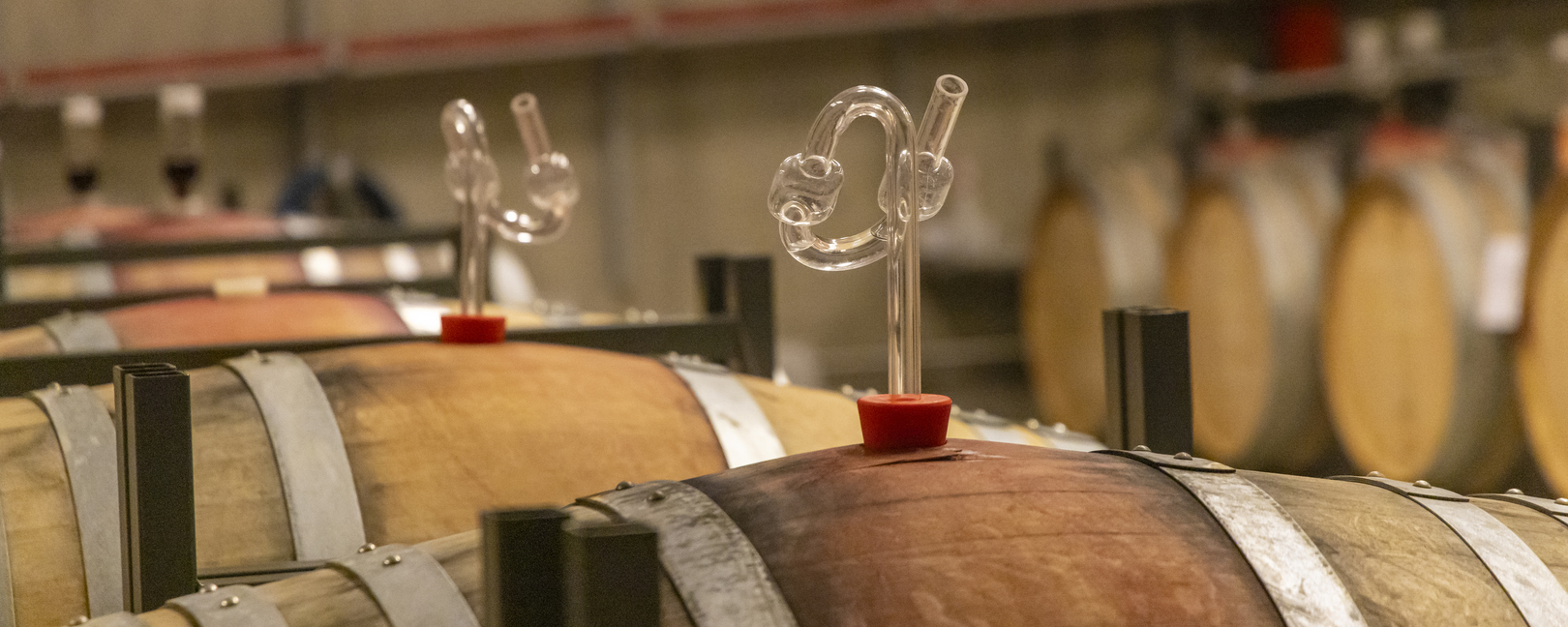
Anyone who takes a closer look at wine will quickly come across the term BSA. Behind this seemingly technical abbreviation lies a process that determines whether a wine is cool and taut, creamy and smooth, straightforward or multi-layered. malolactic fermentation, more precisely, malolactic fermentation. In this article, the Felber Wine Office explains what BSA is all about, how winegrowers work with it - and how you as a connoisseur can recognise whether and how malolactic fermentation has shaped the character of a wine.
To help you better understand the interplay in the cellar, it is worth taking a look at the previous steps of vinification. A sound introduction to the Alcoholic fermentation and the Pressing the grapes can be found in our own articles, which usefully supplement this text.
What is BSA - and what happens chemically in the wine?
The abbreviation BSA in oenology stands for the malolactic fermentation. To put it simply, lactic acid bacteria convert the pungent Malic acid (malate) of the wine into the significantly softer Lactic acid (lactate). From a sensory point of view, the acid structure changes: cool, sharp acidity then appears rounder, creamier and fuller-bodied.
The main chemical reaction is as follows:
Malic acid (dicarboxylic) → lactic acid (monocarboxylic) + carbon dioxide
The reduction from two carboxyl groups to one lowers the titratable acidity somewhat and, above all, the perceived aggressiveness of the acidity. The resulting carbon dioxide largely escapes, but can provide a slight hint of carbon dioxide in the young wine.
Important: Strictly speaking, malolactic fermentation does not break down «acid» as such, but rather converts one form of acid into another. Nevertheless, the term «biological acid degradation» has become established - not only in German-speaking countries, but also in Swiss terminology.
Lactic acid bacteria: The real players in biological acid degradation
While alcoholic fermentation is characterised by yeasts (usually Saccharomyces cerevisiae), in BSA Lactic acid bacteria the process. In practice, the following genera and species play a particularly important role:
- Oenococcus oeni (formerly Leuconostoc oenos): the classic «wine BSA bacterial strain»; excellently adapted to low pH values and alcohol content, therefore the most important partner in the cellar.
- Lactobacillus plantarum and other Lactobacillus species: specifically used in certain styles, but more sensitive to pH and wine composition.
- PediococcusTypes: oenologically rather delicate, as they tend to have off-tones and slimy structures (so-called «stinginess»).
Central to the BSA in wine is Oenococcus oeni. It tolerates low pH values of up to around 3.2, alcohol contents of up to around 13-14 per cent by volume and works reliably under reductive conditions in barrels or tanks, provided the temperature, nutrient levels and sulphur management are right.
Winegrowers are faced with a strategic decision: spontaneous BSA with the natural bacterial flora of the cellar, or inoculated BSA with specifically selected pure cultures. We will come back to this difference in detail below.
Sequence: First fermentation, then BSA - a look at the chronological sequence
Malolactic fermentation never stands alone, but is part of a wine's overall ageing plan. Simplified scheme:
Grapes and pressing
Sorting, destemming, crushing, pressing. The type of pressing already determines the acidity level and phenolics of the must (see Pressing the grapes).
Alcoholic fermentation
Yeasts convert sugar into alcohol and CO₂. During this phase, a large part of the flavour spectrum and structure of the young wine is formed, as we described in the article Alcoholic fermentation explain.
Rest, deduction, first clarification
The young wine is drawn off the lees, followed by the first racking and fining, depending on the style and philosophy.
Biological acid degradation (BSA)
Either directly after alcoholic fermentation (often in red wine) or delayed, for example in certain white wines.
Expansion, maturation, stabilisation
Storage in stainless steel tanks, wooden barrels, barriques or concrete eggs, combined with measures such as micro-oxygenation, filtration and sulphurisation.
Position and timing of the BSA strongly influence the style and stability of the later wine. Early, rapid BSA leads to clear, stable results. Late, uncontrolled BSA - for example in bottles that have already been filled - is considered a significant wine defect.
Sensory effects: How BSA is noticeable in the glass
The malic acid-lactic acid conversion clearly characterises the taste of a wine. Typical sensory effects of BSA:
- Reduction of peak acidityWines appear less «green» and hard, especially in varieties or vintages with a high malic acid content.
- More fullness and creaminessLactic acid imparts a softer, creamy mouthfeel. In combination with the wood, barrique wines produce fine butter, brioche or cream flavours.
- Diacetyl and butter notesAn important by-product, diacetyl, leads to flavours of butter, cream, popcorn or caramel. In moderate doses, this has a positive effect; in high concentrations, diacetyl dominates and masks fruit and terroir flavours.
- Complexity and lengthProperly managed BSA gives many red wines and selected white wines more depth and a more harmonious acid structure.
An example from practice: A Barolo from a cooler year often shows a penetrating, sharp acidity before the BSA. After the BSA is complete, the same wine appears softer, the tannin seems more integrated and the fruit appears riper, although the alcohol content remains unchanged.
BSA for red wine: standard, stylistic device and safety factor
In the upmarket red wine segment, the malolactic fermentation practically standard today. Why?
- Sensory harmonisationThe conversion of malic acid into lactic acid smoothes the acidity and helps tannins to be perceived as finer-grained and less harsh. Particularly typical of grape varieties such as Cabernet Sauvignon, Nebbiolo, Syrah or Tempranillo.
- Microbiological stabilityAn already completed BSA prevents bottles from spontaneously «tarnishing» later in distribution or in the customer's cellar. A late, uncontrolled BSA in the bottle can cause cloudiness, carbonation and off-flavours.
- Integration of BarriqueBSA, slightly increased temperature and oxygen often go hand in hand in wooden barrels. This supports the polymerisation of tannins and the integration of wood notes.
Many top wines from Bordeaux, Tuscany, the Rhône or Spain consciously undergo the BSA. As a connoisseur, you can recognise this in the glass by the combination of ripe but not aggressive acidity, creamy texture and often a subtle touch of butter or cream in the background.
In our range you will find numerous red wines in which malolactic fermentation is a central stylistic element, for example structured Tuscan cuvées such as Bolgheri Rosso Superiore Argentiera or classic Rioja alternatives such as the Tempranillo wines that we offer under Tempranillo - Spain's most important red wine grape variety in detail.
BSA for white wine: between finesse, freshness and Burgundy style
For white wine, the decision in favour of or against BSA is much more nuanced. While BSA is almost always welcome in full-bodied red wines, in white wines it depends heavily on the variety, region, style and vintage.
Typical applications for BSA in white wine:
- Burgundy varieties such as Chardonnay, Pinot Blanc or Pinot GrisFull-bodied wines matured in wood gain a creamy texture through BSA and appear less sharp. Many Chardonnays from Burgundy, Tuscany or the New World deliberately play with this «buttery» profile.
- Vintages with high acidityIn cool years, BSA helps to soften the acidity and make the wine rounder for connoisseurs.
- Complex cuvéesIn white wine cuvées that aim for structure and ageability, some of the base wines go through BSA, others remain «fresh» and are blended later.
When winegrowers avoid BSA for white wine:
- Aromatic varieties such as Riesling, Sauvignon Blanc, MuscatelThese wines live from their taut, vibrant acidity and aromatic precision. A BSA would often disguise the fruit.
- Fresh and fruity stylesYoung, crisp white wines should convey precisely this freshness. Here, BSA would bring too much creaminess and breadth.
- Regional style guidelines: In many regions of origin, a clear, fresh impression of acidity is part of the profile - for example in classic Mosel Rieslings.
A glance at the Feiniwy.ch range shows this diversity: while elegant Chardonnay wines are partly or wholly characterised by BSA and thus exhibit a silky, Burgundian style, many Sauvignon Blanc-wines retain their taut, vibrant acidity without BSA in order to preserve the varietal freshness.
BSA for sparkling wine and champagne: fine-tuning the freshness
In the sparkling wine sector, too, the malolactic fermentation plays an important role, especially in the traditional bottle fermentation process:
- Champagne and high-quality sparkling winesHere, the wineries decide very consciously whether and to what extent base wines undergo BSA. In the case of base wines with high acidity, BSA can help to harmonise the base wines before they go into bottle fermentation.
- Style question house characterSome champagne houses largely dispense with BSA in order to preserve a taut, citrus-accentuated acidity. Others systematically use BSA to produce particularly creamy, full-bodied cuvées.
- Long-term maturityFor sparkling wines that mature for a long time on the lees, BSA produces extremely complex, nutty, brioche-like flavours.
In our range of sparkling wines - from Franciacorta to Champagne - you will find this range of styles. A look at our contribution Interesting facts about sparkling wines supplements the technical aspects of BSA with specific examples and recommendations for enjoyment.
Spontaneous vs. inoculated BSA: philosophy and practice in the cellar
A central question arises when working in the cellar: Does the winemaker let the BSA run off spontaneously or does he deliberately inoculate the wine with pure-bred bacteria?
Spontaneous BSA:
- The natural bacterial flora from the vineyard, grape skins, cellar, wooden barrel and environment initiates the BSA.
- The process often starts with a delay, requires stable temperatures and finely tuned sulphur management.
- The result: sometimes greater flavour variety, sometimes rustic, authentic styles.
- Risk: Off-flavours, incomplete BSA or undesirable metabolic products (e.g. excessive diacetyl notes, volatile acidity, sliminess).
Inoculated BSA with pure cultures:
- Specially selected strains (usually Oenococcus oeni) are added to the wine, often shortly after the end of alcoholic fermentation.
- The process can be better controlled and the duration significantly shortened.
- Better planning in terms of filling dates and microbiological stability.
- Aromatically tends to be «cleaner» and more reproducible, but sometimes less «wild» in flavour.
In the premium wine scene, as curated by Feiniwy.ch, many wineries combine both approaches: In high-quality cellars with stable microflora that has grown over decades, traditional wineries often deliberately work with spontaneous BSA in wooden barrels. Modern wineries with highly reductive ageing methods often use pure-bred strains in order to eliminate off-flavours and achieve a clearly defined house style year after year.
Influencing factors: When malolactic fermentation succeeds - and when it doesn't
Whether and how BSA in the wine depends on a finely balanced interplay of several factors:
- pH value and total acidityVery low pH values inhibit many bacterial strains. Oenococcus oeni remains efficient in the range of around pH 3.2-3.5, while other strains prefer higher pH values.
- Alcohol content: From about 14 vol.-% even Oenococcus oeni struggles. The higher the alcohol, the more sensitive the BSA reacts.
- TemperatureBSA runs optimally in the range of around 18-22 °C. The process quickly stagnates at cool cellar temperatures.
- Sulphur dioxide (SO₂)High free SO₂ levels block bacterial activity. Winegrowers dose sulphur around the BSA very carefully.
- Nutrient supplyLactic acid bacteria require amino acids, vitamins and other nutrients. Emaciated fermentation conditions, heavy filtration or a lack of nutrients delay or prevent BSA.
- Oxygen managementBSA usually requires mild, controlled oxygen conditions. Too much oxygen promotes oxidation and undesirable microflora, too little oxygen combined with reductive conditions slows down the BSA.
Winegrowers in classic regions therefore adapt their vinification plan to the climate and vintage. In cooler years with high malic acid, the BSA is often specifically encouraged, while in warm years with already soft acidity, it tends to be slowed down so that the wine does not appear flat.
Malolactic fermentation and wine defects: where the risks lie
As valuable as BSA is as a tool, if left unchecked it quickly leads to Wine faults. Some typical problem areas:
- Excessive diacetyl notesToo much diacetyl leads to penetrating butter popcorn flavours, which are quickly perceived as disturbing, especially with delicate white wines.
- Slimy feel («stinginess»)Certain Pediococcus or Lactobacillus strains form polysaccharides that make the wine appear stringy and oily - a classic mistake.
- Volatile acidUnder unfavourable conditions, some bacteria produce increased amounts of acetic acid and ethyl acetate. The result: pungent vinegar and adhesive odours.
- Secondary fermentation in the bottleIf the BSA is not completed during bottling, remaining bacteria will continue their activity in the bottle. The consequences are turbidity, CO₂ formation and unstable flavour.
- Formation of biogenic aminesHistamine, tyramine and other biogenic amines are sometimes increasingly produced in the context of BSA. They are considered possible triggers for headaches and intolerances in sensitive people.
Reputable companies, such as those represented in the Feiniwy.ch range, therefore invest a great deal of attention in hygiene, temperature control, careful sulphur dosing and micro-filtration. Goal: Controlled BSA with a clearly defined sensory target, without the risks of uncontrolled bacterial activity.
Vintage, climate and terroir: when BSA makes the decisive difference
The malolactic fermentation never stands outside the context of climate and origin. Its effect is closely linked to the natural acidity structure of the grapes:
- Cool regions, cool vintagesHigh malic acid content, taut acid structure. BSA smoothes the acidity and makes wines more accessible. Example: a Pinot Noir from a cool Swiss year.
- Warm regions, ripe vintagesLess malic acid, more tartaric acid and potassium. Too much acid tension would be lost here through BSA, and wines would quickly appear broad. Winegrowers slow down BSA or prevent it altogether.
- High altitudes vs. locations near the riverVines in cool, high altitudes often store more malic acid, while hot river valleys break it down more. BSA therefore plays a different role in mountain locations than in low, hot locations.
In Switzerland in particular, where Feiniwy.ch has its origins, altitude, exposure and microclimate have a significant impact on the acidity structure of the grapes. A Pinot Noir from Graubünden places different demands on BSA management than a Merlot from Ticino. If you want to deepen your understanding of these relationships, we recommend taking a look at our article Working in the vineyard, which shows how winegrowers create the conditions for harmonious acidity in the vineyard and thus also for the targeted use of BSA.
BSA and grape varieties: Which grapes benefit most
Not every grape variety reacts in the same way to malolactic fermentation. Some examples from the Feiniwy range:
Red wines:
- Cabernet SauvignonPronounced acidity and strong tannins benefit greatly from BSA. Structure appears finer after acid reduction, edges appear polished. You can find more detailed information on the variety in our article Cabernet Sauvignon - origin, flavour and style.
- Cabernet FrancBSA supports the integration of the somewhat cooler, herbaceous notes and the often lively acidity of this grape variety. Details in the article Cabernet Franc - flavour, origin and style.
- Petit VerdotHigh acidity, intense colour, robust tannin - BSA helps to harmoniously integrate this powerful variety. Read more about the grape variety in the article Petit Verdot - origin, flavour and style.
- SangioveseIn Tuscany, BSA plays a key role in rounding off the tending crisp acidity without losing the typical cherry fruit. Our article Sangiovese - top Italian grape illuminates the varietal character in detail.
- Pinot Noir/BlauburgunderBSA is used in many Pinot styles - especially in barrique - to smooth the acidity and achieve a silky mouthfeel. You can find out more about the grape variety at Pinot Noir - Grape variety portrait.
White wines:
- ChardonnayA prime example of the targeted use of BSA. Depending on the ageing process, the spectrum ranges from taut and mineral without BSA to lush, buttery and characterised by barrique with full BSA. Our article provides a detailed look at the variety Chardonnay - origin, flavour and style.
- Sauvignon BlancUndesirable in most styles, as BSA blurs the aromatic precision. It is only used in a few, deliberately opulent cuvées.
- RieslingRiesling traditionally remains without BSA in order to preserve the taut acidity typical of the variety. However, in exceptional cases, such as for certain dry, barrique-aged styles, winegrowers use partial BSA.
For you as a connoisseur, it is worth reading labels, technical data sheets or the descriptions in our shop. Producers often explicitly mention the BSA they have gone through if it significantly characterises the profile of the wine.
BSA in the context of other cellar techniques: Microoxygenation, wood and sulphur
The malolactic fermentation is closely linked to further expansion decisions:
- Wooden barrel and barriqueMany winemakers deliberately control the BSA in wooden barrels. The slightly higher temperature and the controlled oxygen input from the wood promote the process. At the same time, wood tannins and microvinification support the harmonisation of tannin and acidity.
- MicrooxygenationThis technique, in which tiny amounts of oxygen are introduced into the wine, is mainly used for red wine. It often follows the BSA and stabilises the colour and structure.
- Sulphur managementBefore, during and after the BSA, the cellar master doses free and bound SO₂ quantities in a finely tuned manner in order to support or slow down the desired bacteria and suppress other microorganisms.
- Filtration and stabilisationFiltration and, if necessary, cold stabilisation usually follow after the BSA to make the wine microbiologically safe and storable.
For Feiniwy.ch as a curating retailer focussing on quality and authenticity, the focus is on ensuring that these technical steps support the character of the origin and variety, rather than masking it. Ideally, you will experience in the glass how BSA, wood and terroir intertwine.
Practical tasting tips: Recognising and classifying BSA in the glass
As a connoisseur, how do you recognise whether a wine has the malolactic fermentation has gone through or not? Some hints during the tasting:
- Acid structureA wine with BSA generally appears softer, the acidity broader and creamier. Without BSA, the acidity appears more linear, «sharper» and citrus-emphasised.
- FlavourLook out for subtle notes of butter, cream, brioche, yoghurt or popcorn - an indication of diacetyl and therefore BSA, especially in white wines.
- MouthfeelBSA wines often show more viscosity and melting on the palate, especially in combination with barrique ageing.
- For example, taste a taut, tank-aged Chablis without BSA next to a barrel-aged Chardonnay with full BSA. The difference in mouthfeel and flavour shows the effect impressively.
If you want to systematically deepen your understanding of the effects of BSA, you can put together a small tasting set: a fresh, acidic white wine without BSA, a Burgundy-influenced Chardonnay with BSA, a reductively matured red wine with little BSA influence and a classic barrique red wine with complete organic acid reduction. You will find a variety of suitable examples in the Feiniwy.ch range - our team at Weinbüro Felber will be happy to help you make your selection on request.
BSA, meal recommendations and food pairing
The way a wine presents its acidity has a very direct influence on how well it accompanies food. BSA plays an underestimated role here:
Wines with BSA:
- are an excellent accompaniment to creamy dishes such as risotto, cream sauces, strong cheeses or stews;
- balance fat and fullness without being aggressive;
- Complement buttery flavours in the kitchen (nut butters, gratinated dishes, baked vegetables).
Wines without BSA:
- are better suited to light, fresh dishes, fish, seafood, vegetables and salads;
- with their taut acidity provide a clear contrast to savoury or slightly fatty dishes;
- emphasise citrus and herbal notes in the kitchen.
If you want to delve deeper into the topic of food and wine pairing, we recommend our guide Wine and cheese - the best pairings for gourmets and the contribution Red wine or white wine - which is the right one for your menu?. Both articles give you tried-and-tested guidelines on how to take the acid structure - and thus indirectly the influence of BSA - into account when planning your menu.
Shelf life and BSA: How wines develop over the years
Another aspect of malolactic fermentation concerns the shelf life of a wine. Acidity is one of the most important natural stability factors. The handling of BSA therefore has an influence:
- Maturation potential: Wines with very low acidity due to a strong loss of BSA appear accessible early on, but lose tension more quickly. Wines with deliberately moderate or no BSA retain more acidity backbone and therefore long-term ageing potential.
- Maturing profile: A wine with BSA tends to mature in the direction of honey, nuts, brioche and dried fruit. Without BSA, the development often remains citrus and stone fruit-orientated, with greater freshness on the nose.
- Stability: A completed BSA before filling reduces the risk of microbiological instability. Combined with correct sulphur dosing and clean filtration, this creates a resilient foundation for longer storage.
A deliberate mix is worthwhile in your private cellar: some wines with a pronounced BSA for medium-term enjoyment, combined with wines with no or reduced BSA content for long maturation curves. Our guide to Tips for storing wine at home and Red wines and food recommendations help you make the right choice and store it correctly.
BSA from the wine lover's perspective: what to look out for when buying
For connoisseurs, the practical question is: How do I take malolactic fermentation into account when making a purchase decision?
- Clarify your style preference: Do you prefer fresh, taut wines with lively acidity, or do you favour creamy, soft textures? BSA tends to favour the latter.
- Read labels and descriptions: Many producers and retailers mention BSA, «malolactic fermentation» or notes such as «buttery notes» in the descriptions.
- Regional signals: Classic Burgundy chardonnays, many Tuscan red wines and barrique cuvées from Spain work intensively with BSA. Riesling from cooler regions and crisp Alpine white wines often do without it.
- Use our advice: At Weinbüro Felber, we are very familiar with the ageing philosophies of our partner wineries. If you tell us which style you prefer, we will guide you specifically to wines with a matching BSA profile.
When browsing through our range - for example in the categories Buy red wine, Buy white wine or Buy wine online - you will find numerous references to ageing, use of barriques and style in the product descriptions. This information often also indicates whether and how BSA plays a role.
BSA at the crossroads of tradition, craftsmanship and modern technology
The developments in viticulture over the last few decades can be clearly seen in the field of malolactic fermentation:
- Tradition: For centuries, BSA was mostly spontaneous, unconscious and uncontrolled in wooden barrels. Wines that overwintered warm in the barrel underwent BSA, others did not - depending on the cellar conditions.
- Scientific approach: Since the 1960s, oenologists have been specifically researching malolactic fermentation, identifying bacterial strains, their metabolic pathways and effects on flavour and stability.
- Modern technologies: pure cultures, precise temperature control, controlled micro-oxygenation and targeted sulphur management allow winegrowers to use BSA as a conscious tool.
- A return to craftsmanship: At the same time, many top wineries are returning to more traditional, artisanal methods, using spontaneous fermentation and BSA - but with the knowledge and control of modern oenology in the background.
The Felber wine office and Feiniwy.ch attach great importance to presenting winegrowers who have mastered this balancing act: traditional cellar culture paired with a modern understanding of quality. Biological acid reduction is a central link between history, craftsmanship and contemporary flavour culture.
Frequently asked questions about BSA and malolactic fermentation
What is BSA?
In viticulture, BSA stands for malolactic fermentation. This involves lactic acid bacteria in the wine converting the sharp-tasting malic acid into the softer lactic acid. This process is also known as malolactic fermentation. BSA makes many red wines rounder and creamier and characterises the buttery, full-bodied style of certain white wines - such as Chardonnay in barriques. At the same time, completed malolactic fermentation increases the microbiological stability of the wine.
What is BSA Medicine?
In medicine, the abbreviation BSA usually stands for something different than in viticulture, namely body surface area. It is used, among other things, for dosing certain medications. In the context of wine, cellar technology and fermentation processes, however, BSA refers exclusively to biological acid degradation, i.e. the conversion of malic acid into lactic acid by lactic acid bacteria. Anyone looking for information on BSA in wine will find content on biological acid degradation and malolactic fermentation, not on medicinal body surfaces.
What does BSA mean?
In viticulture, BSA stands for malolactic fermentation. The abbreviation summarises a central step in the ageing of many wines, in which lactic acid bacteria (e.g. Oenococcus oeni) convert malic acid into lactic acid and thus change the acid structure. In other contexts, however, BSA can mean something completely different, such as «Body Surface Area» in medicine or «Birmingham Small Arms» as a historical brand name. For wine lovers, however, BSA is clearly associated with biological acid degradation in wine.
What does the abbreviation BSA mean?
In oenology, the abbreviation BSA stands for malolactic fermentation. It describes the bacterial conversion of malic acid to lactic acid in wine, also known as malolactic fermentation. Malolactic fermentation has a significant influence on the flavour, acid structure, creaminess and ageing potential of a wine. Although the abbreviation BSA is also used in other specialist areas, it always refers to malolactic fermentation in the context of wine, cellar technology and tasting.
Is malolactic fermentation good or bad for the wine?
Whether BSA is good or bad depends on the type of wine, the grape variety and the desired style. For many red wines, malolactic fermentation is considered a desirable standard, as it harmonises tannin and acidity and makes the wine more stable. For certain white wines, such as creamy Chardonnays aged in barriques, BSA creates the typical buttery, full-bodied character. For fresh, aromatic varieties such as Riesling or Sauvignon Blanc, on the other hand, winemakers often do without BSA in order to preserve the taut, lively acidity. Used correctly, BSA is therefore a style-forming tool, not a quality characteristic in itself.
As a consumer, how do I recognise whether a wine has undergone BSA?
You can find references to BSA in the winery's technical specifications or in the wine description in the shop. It often says «malolactic fermentation» or «malolactic fermentation». A softer, creamy acidity, buttery or yoghurt-like notes and a fuller mouthfeel indicate malolactic fermentation. Many full-bodied red wines and barrique-aged white wines display these characteristics. If you are unsure, a personal consultation will help - the Felber wine office will be happy to explain to you what role BSA has played in the ageing process for every wine in the Feiniwy.ch range.
Am I less able to digest wines with BSA because of histamine?
During malolactic fermentation, biogenic amines such as histamine are produced in some cases. People with histamine intolerance therefore find certain wines problematic. However, whether a wine has undergone BSA says nothing about the exact histamine content, as this depends on bacterial strains, hygiene, temperature control and many other factors. Sensitive connoisseurs are better off looking for wines with clearly declared low histamine levels and carefully managed wineries. On request, Weinbüro Felber can recommend wines with moderate histamine levels and explain how BSA was handled in these cases.
///Comment: Tips for external links for E-E-A-T (Note: depending on the target implementation, the links are integrated into the actual article text)
- https://www.agroscope.admin.ch - Specialised information on winemaking and in particular on malolactic fermentation and malolactic fermentation in Switzerland; ideal as an in-depth study after the sections on chemical principles and influencing factors of the BSA.
- https://www.hs-geisenheim.de - University documents and publications of Hochschule Geisenheim University on oenology, lactic acid bacteria and vinification; suitable after the section on lactic acid bacteria and pure cultures.
- https://www.oiv.int - Guidelines and resolutions of the International Organisation of Vine and Wine (OIV) on oenological processes, including malolactic fermentation; useful after the presentation of tradition vs. modern cellar technology.
- https://www.lallemandwine.com - Specialist information from a specialised oenological supplier on BSA bacterial strains, nutrients and process management; supplemented after the section on spontaneous vs. inoculated BSA.
- https://www.dlg.org/de/lebensmittel/themen/wein - DLG background article on wine analysis, acidity, wine faults and ageing; suitable after the sections on wine faults, volatile acidity and biogenic amines.
Wines at fair and transparent prices
feiniwy.ch
- Sales
- Novelties
- Alcohol-free products
- Red wines
- White wines
- Rosé wines
- Sparkling wines/champagne
- Olive oil
Felber wine office
feiniwy.ch