

No products in the cart.
feiniwy.ch
Pressing the grapes
- Winemaking in the cellar
- All contributions
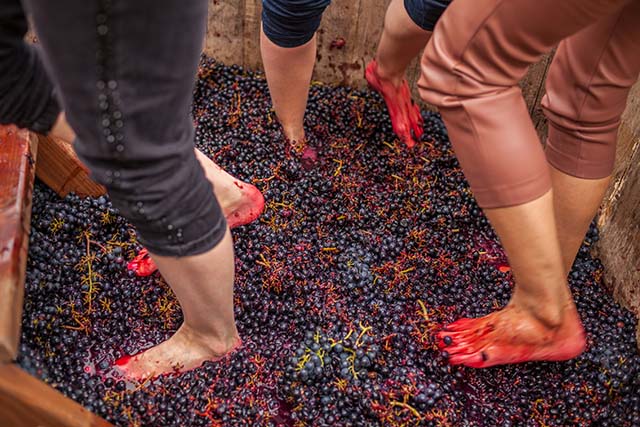
The Pressing the grapes is one of the quietest but most formative moments in winemaking. At the Felber wine office, we work daily on how carefully harvested grapes are turned into nuanced white wines, elegant sparkling wines and red wines full of character - and how much the type of pressing remains noticeable later in the glass. A distinction is made between manual pressing with the feet, where the grapes are only pressed, and mechanical pressing of the grapes.
From the harvest to the press: Why timing and grape condition are crucial
Before the first grape touches the press, a number of quality decisions are already made. The degree of ripeness, health of the berries and temperature on arrival in the cellar determine how intensively the skins, seeds and stems come into contact with the must.
For high-quality white wines and sparkling wines, the quality-orientated cellar management prefers short distances between the vineyard and the press house. The grapes reach the press cool and as intact as possible. The more intact the berries remain when the grapes are pressed, the finer and clearer the later wine will be.
If you are interested in more detail about the work before pressing, it is worth taking a look at our article Working in the vineyard - how winegrowers influence the quality of the grapes.
Methods of pressing the grapes: from whole bunch pressing to the red wine mash
The choice of method depends on the type of wine, grape variety and desired style. Basically, cellar masters distinguish between three central procedures.
Gentle whole bunch pressing for white wine and sparkling wine
With the Whole bunch pressing unharmed, undestemmed grapes go directly into the press. The aim: pure juice with low lees content, delicate phenols and high freshness. Pneumatic presses with a membrane allow finely dosed pressure levels, often over several hours.
Typical grape pressing process for white varieties:
- Placing the whole grapes in the press
- Free-running phase: juice flows out of the berries without pressure
- Gradual increase in pressure, interrupted by relaxation phases
- Juice separation into qualitative fractions (pre-pressing, main pressing and post-pressing)
This form of pressing the grapes produces light-coloured, clear musts - ideal for Chardonnay for sparkling wine, mineral Chablis or elegant Swiss white wines, as you can find in our category Buy white wine find.
Destemmed grapes and maceration time: targeted flavour extraction
If the cellar master wants more structure and a more grippy mouthfeel, he removes the stems, lightly crushes the berries and uses a Mash standing time. In this phase, flavourings, phenols and some of the colour pigments are transferred to the juice.
After this contact time, the grape mash is pressed. This method provides more depth and length, especially for aromatic varieties such as Sauvignon Blanc or full-bodied white wines. If you try our structured white wines from Italy or Austria, for example in the categories French wine or Italian wine, you can taste these technical cellar decisions very clearly.
Pressing the red wine grapes: colour, tannin and texture
With red wine, the focus is on the fermentation of the mash before the actual pressing. The skins provide colour and tannin, while the seeds and stems influence the structure and feel. Only when the desired extraction has been achieved does the winemaker separate the young wine from the mash and press the remaining pomace.
| Faction | Origin of the pressing | Typical properties | Usual use |
|---|---|---|---|
| Pre- and freewheeling must | Without or with very low pressure | Very clear, fine, low tannin content | Top wines, high-quality sparkling wines |
| Main pressing | Moderate pressure when pressing the grapes | Balanced structure, typical flavour | Quality wines, main lot of a vintage |
| Repressed wine | High pressure, last juice portions | More tannin, stronger phenolics, higher lees content | Blending, base wines, distillate base |
Grape must is therefore not produced as a homogeneous mass, but as a finely graded palette. An experienced cellar master decides which fraction goes into an elegant Pinot Noir, a fresh Sauvignon Blanc or a base wine for sparkling wine. If you are looking for a suitable sparkling wine in the shop, our article will help you Interesting facts about sparkling wines for orientation.
Grape must, alcohol and style: what arrives in the glass
As soon as the grape must rests in the tank, alcoholic fermentation begins. The yeast converts sugar into alcohol and carbon dioxide. Two points characterise the later profile:
1. sugar and acid content of the must
The degree of ripeness of the grapes and the yield when the grapes are pressed determine the density and acidity structure. A carefully pressed must usually has a more harmonious acidity and purer flavour. You can sense this when you taste a finely balanced Swiss Pinot Noir from our Swiss wine try.
2. phenol content and lees content
A clear, less contaminated must ferments more purely. Excessive bitter substances from hard-pressed grapes lead to harsh tannins, which winegrowers later have to work hard to balance. A skilful pressing strategy saves many corrections at this point.
Grape pressing and flavour: why technology remains a sensory experience in the end
Anyone who has ever tasted two wines from the same vineyard - one from whole-cluster pressing and one from more extracted mash pressing - experiences the influence of the pressing technique directly.
Wines from particularly gentle pressing of the grapes:
- Brighter colour and sparkling brilliance
- Fine, often floral or citrus flavours
- Straightforward acidity and clear drinking flow
Stronger pressed wines, on the other hand, are effective:
- fuller in the mouth
- with a more pronounced texture and tannin structure
- Predestined for ageing in wooden barrels and longer maturation
In our range at feiniwy.ch you will find suitable examples of both styles - from fresh white wines to powerful red wines and complex sparkling wines. Feel free to browse through the entry Buy wine online at Feiniwy through the different regions of origin.
Frequently asked questions about pressing the grapes
What does it mean to press grapes?
The pressing of the grapes describes the step in which juice is extracted from the berries. Winemakers place whole grapes or mash in a press, apply controlled pressure and separate the grape must from the skins, seeds and stems. Depending on the type of wine, this pressing of the grapes can be extremely gentle, for example when pressing whole grapes for sparkling wine, or more intensive, for example after red wine mash fermentation, in order to obtain pressed wines rich in colour and tannins.
How do I press grapes?
The following applies to the hobby cellar: pick healthy grapes, remove leaves, clean containers and equipment thoroughly and then work with even, moderate pressure. Small quantities are suitable for pressing grapes without a press using cheesecloth or sturdy bags, larger quantities benefit from hand or spindle presses. It is important not to crush the seeds in order to avoid bitter substances and to cool the fresh grape must quickly afterwards.
How are grapes pressed?
Professional wineries mainly use pneumatic presses with an elastic membrane. These devices allow a finely graduated pressing of the grapes with alternating pressure and relaxation phases. For white wine and sparkling wine, whole grapes or destemmed grapes are fed directly into the press; for red wine, pressing only takes place after mash fermentation. The different must fractions - free-run must, main pressing, post-pressing wine - are collected separately and used in a targeted manner.
Pressing grapes at home - what does it take?
To press grapes at home, all you need are healthy grapes, clean buckets or fermentation containers, a cheesecloth or a small hand press and a cool storage place. If you regularly produce grape must, invest in a small spindle or hydraulic press. This enables controlled pressing of the grapes with a good yield, without the seeds breaking or too much lees getting into the must.
What happened to the woman who stomped grapes?
This question refers to a viral TV clip in which a reporter falls and moans while stomping grapes. This event plays no role in professional winemaking. In modern cellars, the targeted pressing of grapes with hygienic presses replaces traditional crushing. This enables winemakers to ensure consistent quality, controlled grape must alcohol development and a precise flavour profile.
What role does grape must alcohol play in the finished wine?
The alcohol produced during fermentation depends directly on the sugar content of the grape must, which in turn is strongly influenced by the degree of ripeness and yield when the grapes are pressed. Gentle pressing keeps the ratio of sugar, acidity and phenols in balance, resulting in a harmonious alcohol content, clear structure and good ageing potential.
Can I buy grape must instead of pressing it myself?
If you don't have your own vines or don't want to use a press, you can opt for high-quality grape must. For wine lovers who prefer to enjoy the finished product straight away, Feiniwy offers a curated selection of white wines, red wines and sparkling wines for which experienced winegrowers have already perfected the pressing of the grapes and the entire cellar work. So you can enjoy the result of many well thought-out decisions in the vineyard and in the cellar from the comfort of your glass.
///Comment: Tips for external links for E-E-A-T (Note: depending on the language: de-DE)
- https://www.winzerkrems.at/fileadmin/Bibliothek/WEBSEITE_WINZERKREMS/Service/Presse/_Unternehmensinfo/Winzer_Krems_Unternehmensinfo_2025_deutsch.pdf - Company information with description of modern pneumatic whole bunch pressing and cellar technology; useful after the section „Methods of pressing the grapes“.
- https://www.visitvino.cz/guide/de/VISIT_WEIN_2020.pdf - Brochure on wine and viticulture with technical details on pneumatic wine presses and yield; matching the table on must fractions.
- https://www.champagne.fr/de/den-champagne-entdecken/champagne-herstellung/die-pressung - Official website of the Comité Champagne on whole-cluster pressing in Champagne; recommended after the whole-cluster pressing and sparkling wine production section.
- https://www.buchervaslin.com/wp-content/uploads/2023/11/Catalogue-Bucher-2024-DE.pdf - Technical documentation from a leading manufacturer of pneumatic presses, useful for learning more about modern pressing programmes; useful after the section „How are grapes pressed?“ in the FAQ.
- https://glossar.wein.plus/pressen - Specialist lexicon entry on the subject of pressing with definitions and variants; suitable as an additional link at the end of the section „From pressing to must“.
- https://www.weinhalle.de/weinwissen/traubenpresse.html - Specialist article on the development of the grape press from the basket press to the pneumatic horizontal press; can be inserted after the section „Pressing grapes at home“ as technical background for interested readers.
Wines at fair and transparent prices
feiniwy.ch
- Sales
- Novelties
- Alcohol-free products
- Red wines
- White wines
- Rosé wines
- Sparkling wines/champagne
- Olive oil
Felber wine office
feiniwy.ch