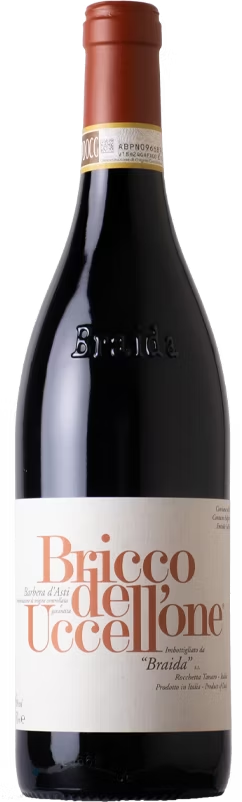
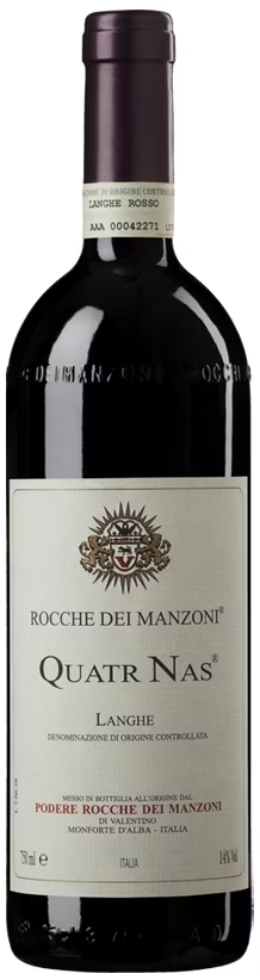
The Piedmont in north-west Italy is one of the most renowned wine regions in the world. The region comprises around 47,000 to 48,000 hectares of vineyards and is characterised by a continental climate with no Mediterranean influence. Piedmont is particularly famous for its long-lasting, tannin-rich red wines made from the Nebbiolo grape, but also has an enormous variety of indigenous grape varieties.
The Piedmont wine region delivers wines with origin, tension and depth: Nebbiolo, Barbera, Dolcetto, Arneis, Cortese and Moscato show their clearest profile here.
Anyone looking for Piedmont wine quickly thinks of Barolo and Barbaresco. And rightly so. But the region at the foot of the Alps offers much more than just two famous names. Cool nights, limestone-rich marl soils, steep hills and a wine tradition with a razor-sharp sense of origin characterise bottles that do not make a loud entrance at the table, but resonate for a long time.
At Weinbüro Felber, we select Piedmontese wines with an eye to drinking pleasure, origin and maturity. Discover our selection Red wines from Piedmont, if you are looking for Nebbiolo, Barbera or Dolcetto with character.
Why the Piedmont wine region is so highly regarded by connoisseurs
The Piedmont wine region is located in the north-west of Italy. The name means «at the foot of the mountains»; the Alps protect the hills from weather extremes, while fog, slopes and strong temperature differences give the grapes time to ripen. This slow ripening explains the fine fragrance of many wines: roses, cherries, violets, tar, liquorice, hazelnut and herbs.
Piedmont has an unusually clear identity. Many wines come from autochthonous Piedmont grape varieties that hardly achieve the same charisma outside the region. Nebbiolo shows power without a dark colour. Barbera brings fruit and acidity. Dolcetto tastes accessible earlier. Arneis and Cortese produce dry white wines with character.
When making your selection, it is therefore less the big name on the label that counts than the question: Which style suits the occasion?
Barolo PiedmontStructured, long-lasting, ideal with brasato, game, truffle dishes and mature cheeses.
BarbarescoNebbiolo with finesse, often accessible a little earlier than Barolo.
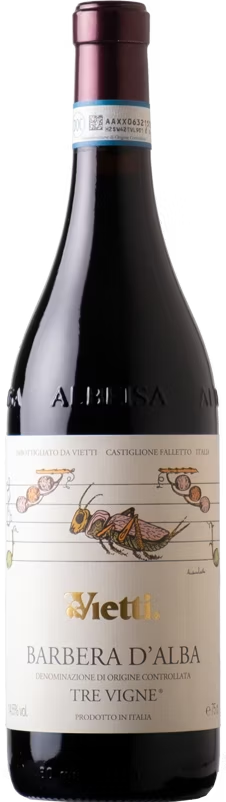
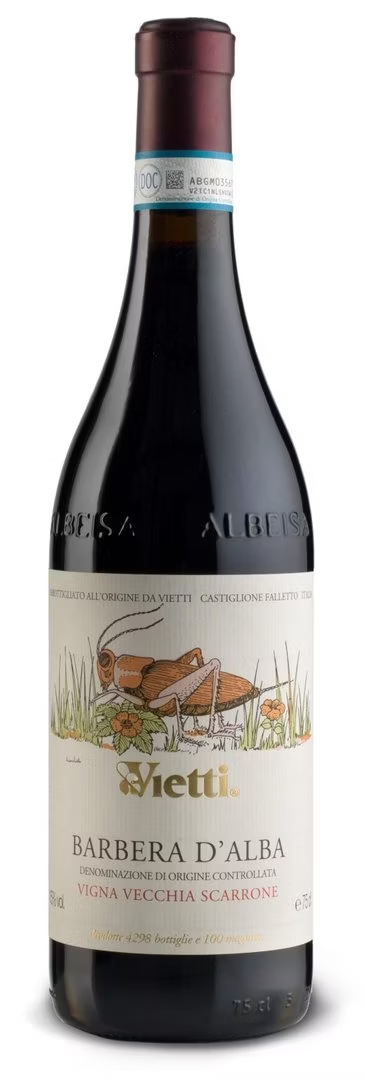
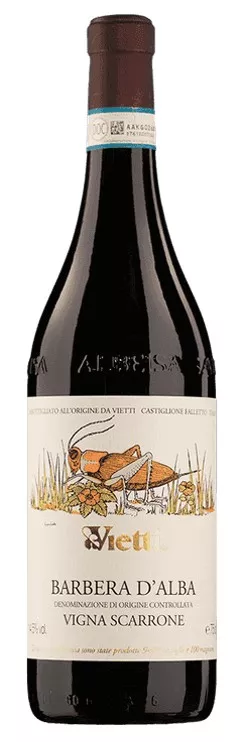
BarberaJuicy, fresh, versatile with pasta, veal, pizza with good salumi or stews.
Roero Arneis and GaviDry white wines for antipasti, fish, poultry and light-coloured sauces.
Langhe, Roero, Monferrato: an overview of the most important wine villages in Piedmont
The Piedmont wine region is not divided into a single centre. It is characterised by chains of hills, villages and small areas of origin. Alba is the culinary anchor point for many wine travellers. It is surrounded by famous names such as Barolo, La Morra, Serralunga d'Alba, Monforte d'Alba, Castiglione Falletto, Barbaresco, Neive and Treiso.
The Langhe stands for Nebbiolo in its most serious form. Barolo and Barbaresco grow here, as well as Barbera d'Alba, Dolcetto d'Alba and Langhe Nebbiolo. Roero lies to the north of the Tanaro and produces the most famous Arneis alongside Nebbiolo. Monferrato and Astigiano set strong accents with Barbera d'Asti, Nizza, Grignolino, Ruchè, Moscato d'Asti and Asti Spumante.
If you would like to compare Italian diversity, it makes sense to continue from here to our Red wines from Italy. There you can see how clearly Piedmont differs from Tuscany, Apulia or Veneto.
Typical Piedmont grape varieties: Nebbiolo leads the way, Barbera carries the day
Typical Piedmont grape varieties tell us a lot about the region's food culture. Nebbiolo requires patience. When young, its wines are firm, sometimes austere, but later they develop notes of dried cherry, rose, leather, tobacco and undergrowth. Barolo from the Piedmont wine region is therefore one of the great ageing wines of Europe.
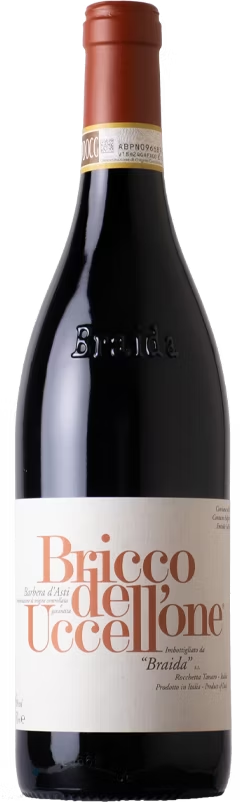
Barbera is on a different stage. This variety has less tannin, but a lot of freshness and dark fruit. Good Barbera wines from d'Asti or d'Alba accompany food with astonishing confidence: tomato sauce, tajarin, polenta, veal shank, grilled vegetables. Despite its name, Dolcetto tastes dry; its cherry fruit, almond notes and moderate acidity make it a glass for the early evening.
The indigenous Piedmont grape varieties also include Arneis, Cortese, Erbaluce, Freisa, Grignolino, Brachetto, Ruchè, Timorasso and Moscato Bianco. Timorasso in particular has gained new attention in the Colli Tortonesi because the variety produces powerful, long-lasting white wines with a herbal flavour and salty tension.
For white discoveries from the region, it is worth taking a look at our Piedmont white wines. If you want to compare more broadly, you will find in the category Buy white wines suitable alternatives from Italy, France, Switzerland and Austria.
Barolo Piemonte: why Nebbiolo develops so much tension here
Barolo is made from Nebbiolo and comes from a clearly defined area around eleven municipalities south-west of Alba. The best-known names, including La Morra, Barolo, Monforte d'Alba, Serralunga d'Alba and Castiglione Falletto, show different faces. La Morra is often more fragrant and accessible, Serralunga d'Alba firmer and longer-lived.
These differences explain why a Piedmont wine estate rarely shines in terms of quantity. The best wineries work precisely on parcels, harvest time, maceration time, wood and maturity. Barrique, large wooden barrel, concrete or steel: every decision changes the texture. In the Piedmont wine region, it is the balance of flavour, acidity, tannin and length that ultimately counts.
There is a simple rule for enjoying wine at home: young Nebbiolo wines benefit from air. Open powerful bottles early or use a carafe. Careful handling is sufficient for mature vintages, as fragile flavours escape quickly. You can find tips on suitable storage in our guide Wine storage at home.
Best Piedmont wines for your table: how to choose with style
The best Piedmont wines are not automatically the most expensive bottles. For a festive menu with Brasato al Barolo, truffle risotto or saddle of venison, Nebbiolo offers great depth. Barbera is often better suited to an evening with friends, as its freshness enlivens the table and does not require long preparation.
If you combine Piedmont sightseeing with wine, you will quickly end up in Alba, Barolo, Barbaresco, Canelli or the hills of Monferrato. Piedmont insider tips can be found in less noisy areas of origin: Verduno with Pelaverga, Dogliani with Dolcetto, Carema in the north, Timorasso from the Tortonese. Wines like these are a talking point in the glass without forcing attention.
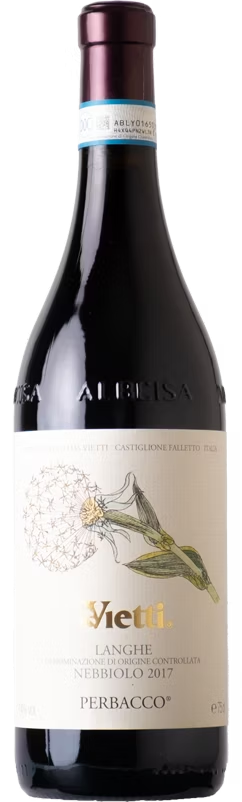
At Feiniwy.ch, we focus on wines that work at the table. A bottle doesn't have to explain how rare it is. It has to fit the moment. If you are unsure, start with a Barbera d'Alba or Langhe Nebbiolo; then the path naturally leads to Barolo, Barbaresco or a mature single-vineyard wine.
Are you planning a meal, a gift or a small Piedmont speciality for your cellar? Browse through our selection of Italian wines or let the Felber wine office advise you personally.
Piedmont wine region and sustainability in viticulture
The Piedmont wine region has many family businesses that have known their vineyards for generations. Steep slopes, small plots and old vines require manual labour. Sustainability here rarely begins with a slogan, but with decisions in the vineyard: greening, gentle soil care, reduced intervention, healthy grapes.
Nebbiolo in particular reacts sensitively to the location and vintage. Those who work cleanly in the vineyard need less correction in the cellar. We are interested in this correlation when making our selection because it characterises the style. You can read more background on this topic in our article on Sustainability in viticulture.
Frequently asked questions about the Piedmont wine region
Where is the most beautiful wine region?
For many wine lovers, the most beautiful wine region in the Piedmont wine region lies between Alba, Barolo and Barbaresco. The hills of the Langhe combine vineyards, hazelnut groves, truffle cuisine and historic villages in a small area.
Where is the most beautiful place in Piedmont?
The Langhe around La Morra, Serralunga d'Alba and Neive are particularly attractive. Roero offers wilder landscapes and good Arneis wines, Monferrato shows a quieter Piedmont with Barbera, Moscato and small villages.
Which region in Piedmont is famous for its wine?
The Langhe is considered the most famous wine region in Piedmont. Barolo Piemonte, Barbaresco, Langhe Nebbiolo, Barbera d'Alba and Dolcetto d'Alba are produced there. Monferrato enjoys a high reputation for Barbera d'Asti and Nizza.
Which wine regions are there in Piedmont?
The most important wine regions include Langhe, Roero, Monferrato, Astigiano, Gavi, Alto Piemonte and the Colli Tortonesi. Each zone produces its own grape varieties, soils and styles.
Which red grape varieties characterise the Piedmont region?
The most important red grape varieties in Piedmont are Nebbiolo, Barbera and Dolcetto. They are joined by Freisa, Grignolino, Brachetto, Ruchè, Pelaverga and Vespolina. Nebbiolo produces the longest-lived wines, Barbera the most versatile food companions.
If you have any questions or would like a consultation, please fill in the form.